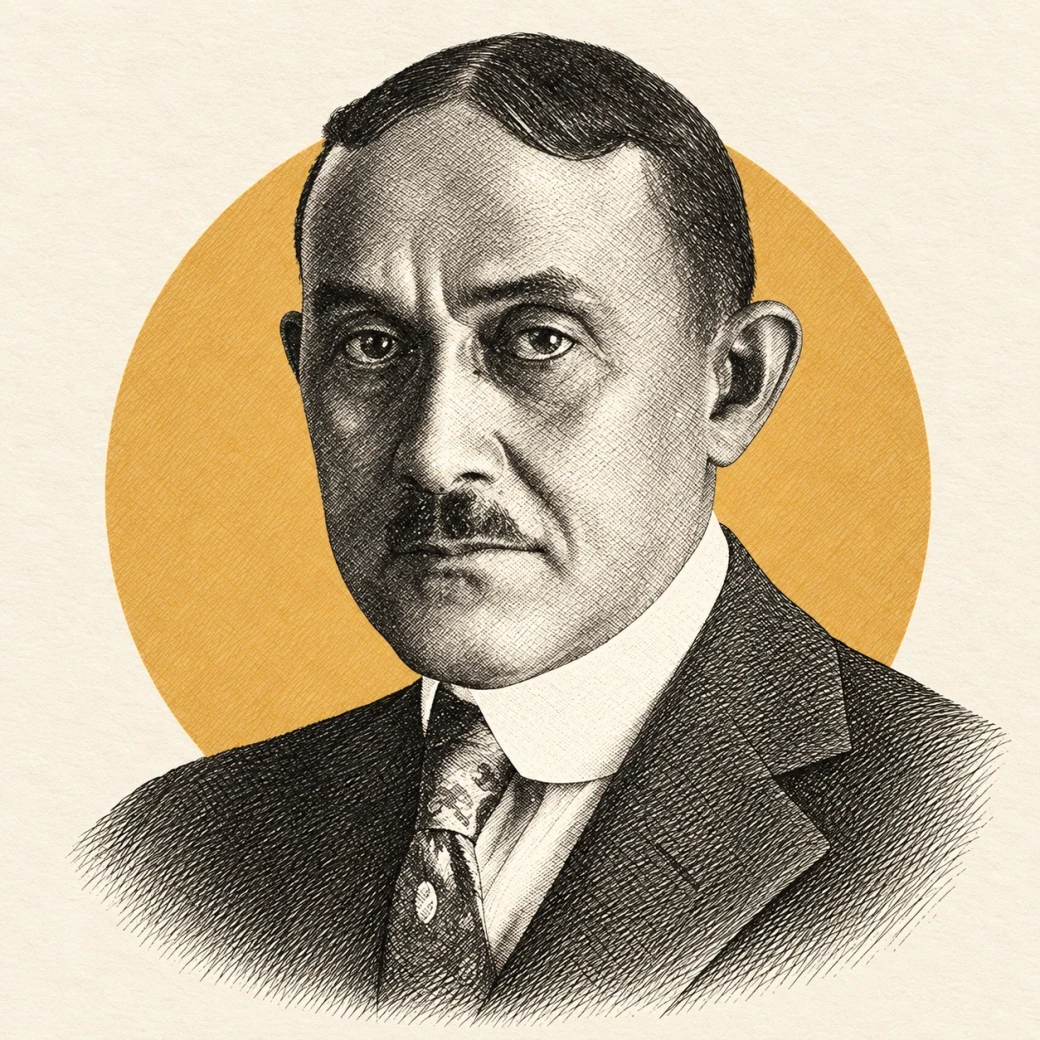
Long before civil rights organizers gathered at his Birmingham motel, Arthur George Gaston was helping Black families meet the cost of a funeral. In 1923, he founded the Booker T. Washington Burial Society. Members paid twenty-five cents a week toward burial services. It was an early step in a business career that would offer Black customers in segregated Alabama insurance, job training, credit and lodging.
Gaston was born in Demopolis in 1892, moved to Birmingham as a boy and attended the Tuggle Institute. Before founding the burial society, he served in the Army during World War I and worked in industry, including the mines near Birmingham. There, he sold homemade sandwiches to fellow miners at lunchtime. The burial society's success later led to the Booker T. Washington Insurance Company in 1932.
A shortage of trained clerical workers led Gaston to establish a business college in 1939. It prepared students for office jobs. Access to credit posed a different problem. Across the country, mortgage lenders widely rejected loans in Black neighborhoods even when borrowers qualified. In Birmingham, where Black borrowers struggled to get loans from white banks, Gaston's Citizens Federal Savings and Loan was a Black-owned institution borrowers could turn to. It was the city's first Black-owned financial institution in about forty years, following the closure of the Alabama Penny Savings Bank.
For Black travelers, segregation could turn the search for a room or a meal into an encounter with humiliation or danger. Gaston's motel, opened in 1954 and designed by architect Stanley B. Echols, offered Black guests first-class lodging and dining.
Nine years later, Martin Luther King Jr., Ralph Abernathy and other civil rights organizers were meeting and holding press conferences there. Room 30 became a center of planning for the Birmingham campaign. The movement used sit-ins, boycotts and marches to press for desegregation of downtown businesses and more jobs for Black workers. Gaston supported the effort with more than a place to meet: he provided bail for King in April 1963.
In early May, police attacked young nonviolent demonstrators with dogs and high-pressure hoses. On May 10, Gaston's motel was the setting for the announcement of a compromise in the Birmingham campaign. The following night, segregationists bombed the home of King's brother, A. D. King, and Gaston's motel. On May 12, President John F. Kennedy announced he was sending a Justice Department official back to Birmingham and had directed military units to bases near the city.
On September 15, a bombing at Sixteenth Street Baptist Church killed four girls. Gaston's home was also bombed that month. Gaston joined King in meeting with Kennedy to urge a federal response. On September 19, after receiving reports from Black leaders, Kennedy appointed two personal representatives to help Birmingham overcome fear and suspicion.
The insurance company had grown from those twenty-five-cent weekly payments. In 1987, Gaston sold it to its employees for $3.5 million through an employee ownership plan. Employees became owners of the business where they worked. He died in 1996 at 103. His motel, built for Black travelers and used by organizers planning the Birmingham campaign, later became part of Birmingham Civil Rights National Monument.