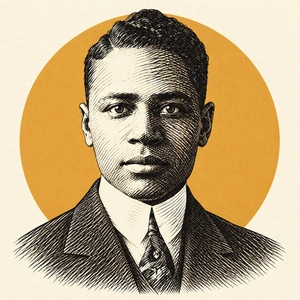
Charles Hamilton Houston was born in Washington, D.C., in 1895. After college and military service during World War I, he entered Harvard Law School. He later described the racism he experienced in the Army as a reason for pursuing law.
At Harvard, Houston became the first African American editor of the law review. He earned his law degree in 1922 and a doctorate in juridical science in 1923, then studied in Madrid before joining his father's Washington legal practice.
Houston became a leader of Howard University's law school, reorganizing its training and helping it move toward full-time, accredited professional education. He taught and mentored lawyers including Thurgood Marshall and Oliver Hill. His vision connected classroom preparation with the practical task of challenging racial discrimination through the courts. The students and colleagues he trained would pursue that work in their own careers.
In 1933, Houston led an all-Black defense team for George Crawford, who faced murder charges in Virginia. The case drew attention to exclusion of Black people from juries. Crawford was convicted but avoided a death sentence.
As an NAACP attorney in the 1930s, Houston helped develop litigation against segregation. He and Marshall documented conditions in Southern schools, including filming the facilities available to Black children. His strategy included attacking unequal higher-education opportunities, building legal challenges before the Supreme Court's later school-desegregation ruling. He died in 1950, four years before *Brown v. Board of Education*.
Loudoun County renamed its historic courthouse for Houston in 2023, recalling his work in the Crawford case.