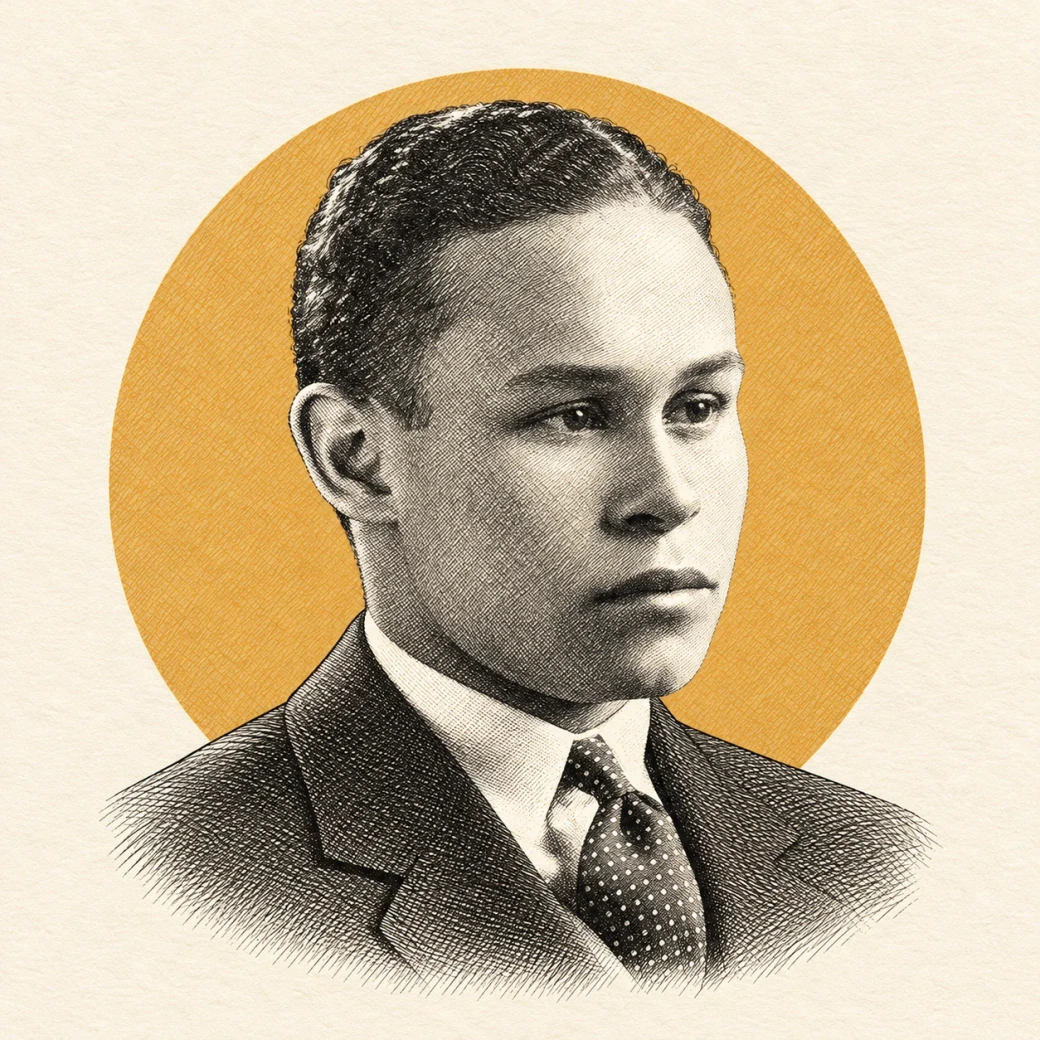
Charles Richard Drew was born in Washington, D.C., in 1904. At Dunbar High School, he combined classroom study with several sports, then attended Amherst College on an athletic scholarship. After graduating in 1926, he taught and coached at Morgan College before entering medical school at McGill University in Montreal. He completed his medical and surgical degrees in 1933.
His interest in transfusion developed during his medical training. He later joined Howard University and worked at its affiliated Freedmen's Hospital. A Rockefeller fellowship brought him to New York in 1938, where he worked with physician John Scudder on an experimental blood bank. Their research examined preservation and the conditions necessary to collect and store blood reliably.
In 1940, Drew completed his Columbia University doctoral thesis, *Banked Blood: A Study in Blood Preservation*. Columbia identifies him as its first African American recipient of a doctorate in medical science. Blood banking drew on the work of many researchers, and Drew's thesis made a central contribution to the questions of preservation and storage.
That work became especially significant during World War II. Drew helped organize Blood for Britain, an American effort to send plasma overseas. The program required coordination across collection, laboratory processing, storage and shipment. Columbia's account emphasizes his role in establishing procedures that could work across participating hospitals. His scientific contribution was joined to the practical demands of running a large program.
He subsequently directed the American Red Cross's pilot blood-banking program. After that three-month undertaking, he returned to Howard in April 1941. He became chair of surgery and chief of surgery at Freedmen's Hospital, devoting much of his remaining career to preparing surgeons. The Science History Institute records that his first group of surgical residents passed their board examinations in 1948.
Drew also opposed racial restrictions on blood donation and professional participation. He worked within segregated institutions while criticizing the rules that governed them, and that tension runs through his documented career.
He died following an automobile accident on April 1, 1950. The National Archives explicitly rejects the persistent story that he died because a hospital refused him treatment: its account documents medical care and transfusions after the crash.