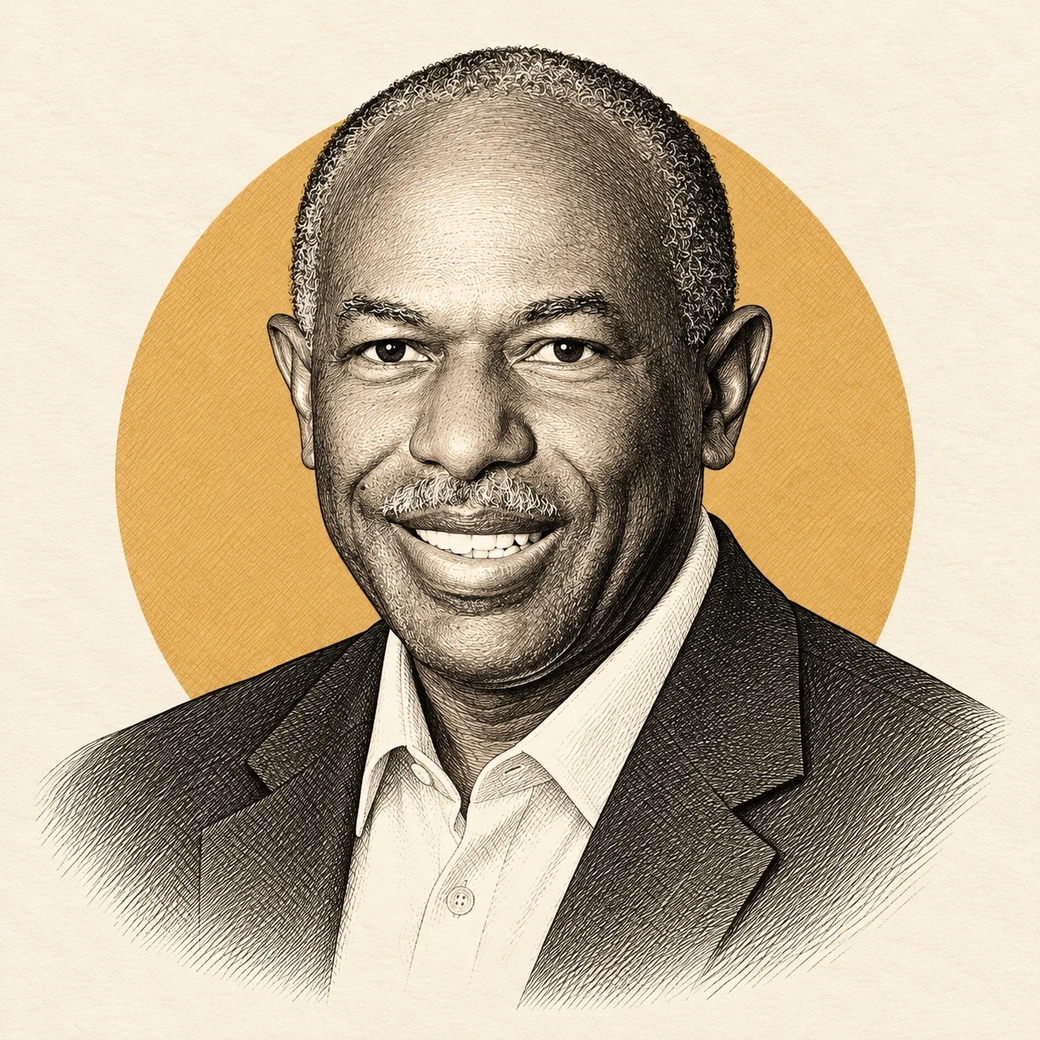
Emery Neal Brown was born in Ocala, Florida, and attended Phillips Exeter Academy before studying applied mathematics at Harvard. After completing his undergraduate degree in 1978, he spent a year studying in Grenoble, France, as an International Rotary fellow. He then returned to Harvard, earning a master's degree in statistics in 1984, a medical degree in 1987 and a doctorate in statistics in 1988.
His clinical training included an internal-medicine internship at Brigham and Women's Hospital and an anesthesiology residency at Massachusetts General Hospital, completed in 1992. He joined the Harvard Medical School faculty that year. The combination of medicine and statistics became a defining feature of his professional work, giving him experience with both clinical questions and methods for analyzing complex observations.
Brown's research has addressed the human circadian clock, neural signals and the effects of anesthetic drugs on the brain. The National Science and Technology Medals Foundation describes his use of statistical models to study biological rhythms and his work on interpreting electrical brain activity during anesthesia.
He joined MIT's faculty in 2005 and co-directed the Harvard-MIT Program in Health Sciences and Technology from 2012 to 2022. An MIT account of his departure from that leadership role describes work with colleagues on faculty membership, student diversity and the transition between remote and classroom instruction during the pandemic.
MIT explicitly identifies Brown as the first African American elected to all three U.S. National Academies: Sciences, Engineering and Medicine. His 2024 National Medal of Science was presented on January 3, 2025.
In July 2026, MIT announced his appointment as an Institute Professor, effective July 1. The same account described him as having recently practiced anesthesiology at Massachusetts General Hospital. It also noted his recognition for graduate-student mentorship through MIT's Committed to Caring award in 2024.