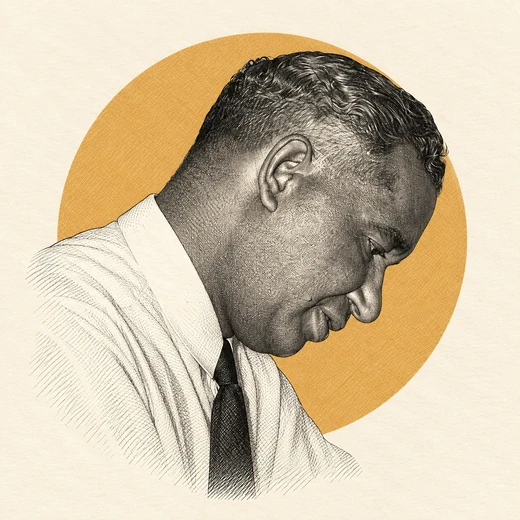
Living organisms such as fireflies produce light through chemical reactions, a phenomenon called bioluminescence. Emmett W. Chappelle, a biochemist born in Phoenix, Arizona, in 1925, found that a specific combination of chemicals caused living cells to emit measurable light, and he turned that discovery into a practical way to detect life where none could be seen. When life is present, the mixture glows; the brightness indicates how much living material is there.
Chappelle earned a master's degree in biology at the University of Washington and served in the U.S. Army. In 1963, while working for NASA, he began exploring the qualities of light given off by different life forms. He was in charge of developing instruments used to scrape soil from Mars on NASA's Viking probe, and in that work he recognized how chemicals gave off measurable light when mixed with materials containing living cells. He applied the technique to detect bacteria in urine, blood, spinal fluids, drinking water and foods. A hospital or a food plant could test a sample quickly instead of waiting days for cultures to grow.
He also advanced laser-induced fluorescence as a way to detect plant stress. Plants under strain emit light differently, and the technique allows scientists to assess the health of crops and estimate productivity from the light they give off. Growers can use that information to adjust planting, irrigation and fertilization.
Alongside his scientific work, Chappelle mentored minority high school and college students. The National Inventors Hall of Fame inducted him in 2007 for his work in bioluminescence techniques. He died on October 14, 2019.
Chappelle's techniques belong to a family of methods that turned chemistry into measurement. A test that answers the question of whether anything is living in a sample serves users with different stakes: a hospital screening a fluid, a city testing drinking water, a food plant checking a batch. His methods gave all of them a faster answer than older culture-based tests, which required days of waiting while organisms grew.