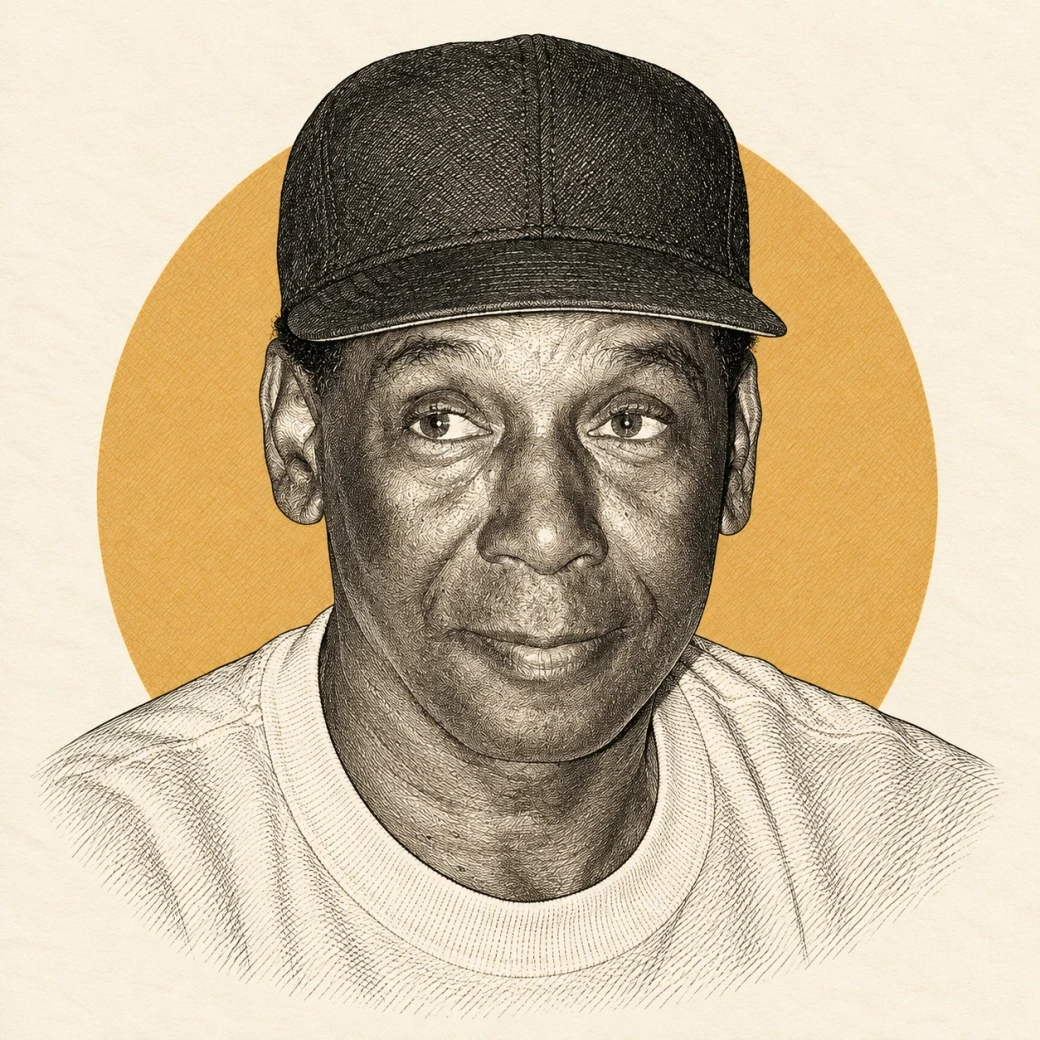
Ernest Banks was born in Dallas, Texas, in 1931. He joined the Kansas City Monarchs of the Negro Leagues in 1950, served two years in the Army, and returned to the Monarchs before moving to Chicago. The Monarchs were the Negro American League club where Buck O'Neil, then a player and manager, first saw him.
O'Neil's recommendation carried Banks to the major leagues. The Chicago Cubs purchased his contract from the Monarchs on September 7, 1953, and O'Neil drove him to Wrigley Field to sign. On September 17, Banks made his major-league debut, becoming the franchise's first African American player, a milestone within the longer history of Black baseball.
Banks developed into a powerful hitter at shortstop. In 1958, he led the National League with forty-seven home runs and 129 runs batted in and won the league's Most Valuable Player award. He won it again in 1959, making him a back-to-back MVP while the Cubs finished below .500 in both seasons. The Hall of Fame's remembrance records forty-seven home runs in the first of those seasons and forty-five in the second.
His defensive work also earned recognition. Banks won a Gold Glove in 1960, and later moved from shortstop to first base. He reached five hundred career home runs in May 1970 and finished with 512, along with 2,583 hits and fourteen All-Star selections.
In November 2013, President Barack Obama presented Banks with the Presidential Medal of Freedom. The ceremony's transcript identifies him as the Cubs' first Black player and recognizes his optimism alongside his hitting. Obama recalled Banks encouraging dispirited teammates by expressing enthusiasm for playing another game, the outlook behind his familiar "Let's play two."
Banks spent nineteen major-league seasons with Chicago and never played in a postseason game. He entered the Hall of Fame in 1977 and died in January 2015. His totals, 512 home runs and 2,583 hits, remain among the franchise's records, and the Hall's remembrance emphasizes the enthusiasm and affection for the sport that ran alongside them.