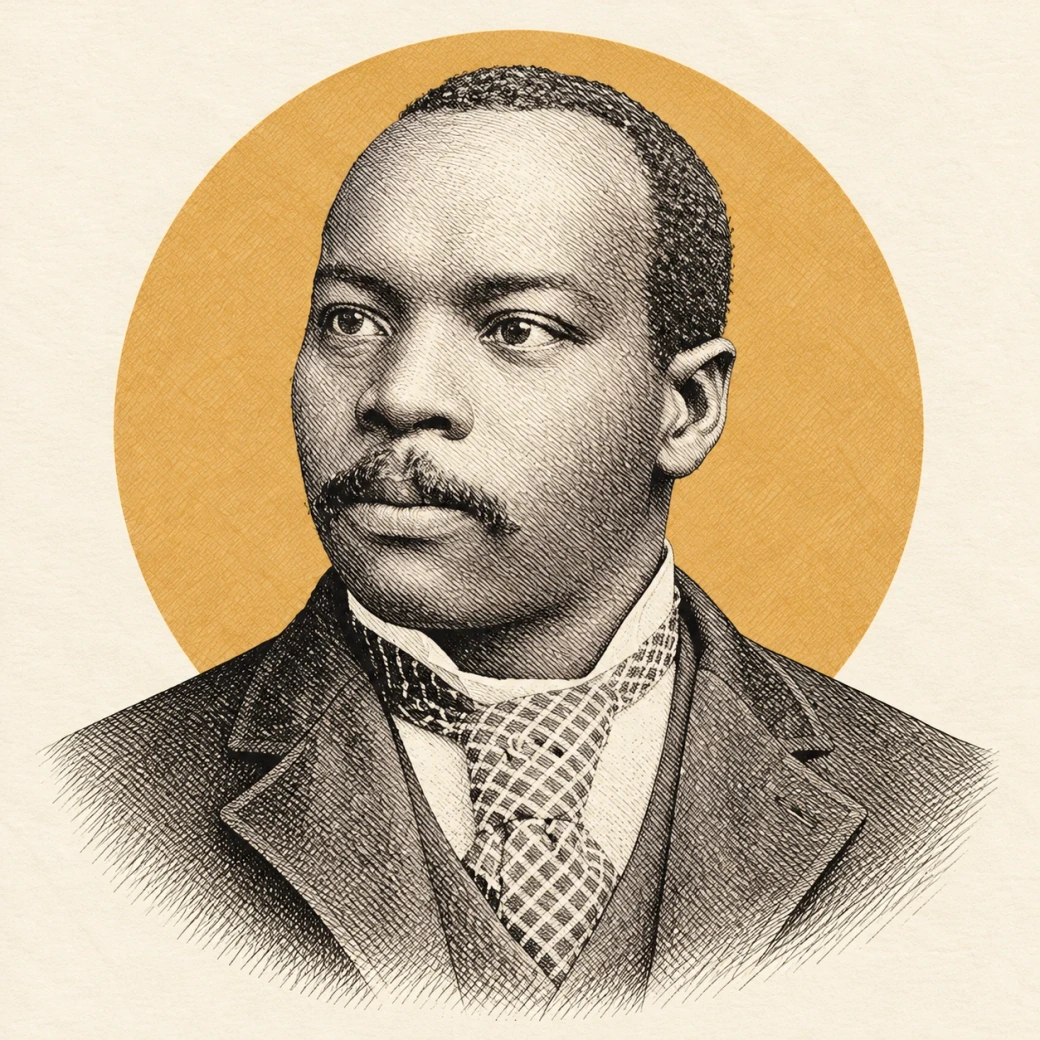
In the railroad age, a dispatcher could telegraph a station instantly, but a train rolling along the track was out of reach. Moving trains could not reliably receive warnings about hazards ahead, and collisions on busy lines killed crew members and passengers. Granville T. Woods, an African American inventor, addressed that gap with electrical engineering.
Woods was born in 1856 and gained experience through mechanical work while studying electricity independently. He developed inventions in Cincinnati and established the Woods Electric Company.
His railway telegraphy, patented in 1887, allowed communication between stations and moving trains. The system exchanged signals through telegraph wires running beside the track, using induction so that messages could pass between the wires and a receiver on the train while the wires continued their ordinary telegraph service. The National Inventors Hall of Fame credits his induction telegraph with allowing moving trains to communicate with stations and with each other, a capability railroads had lacked.
Woods later moved his business to New York and worked with his brother Lyates, also an inventor. His career included patented improvements in the use of electricity on railways, a field that was transforming transportation in the late nineteenth century. He died in 1910 and was inducted into the National Inventors Hall of Fame in 2006.
The stakes in railway communication were concrete. Trains shared single tracks, and dispatchers used fixed telegraph lines to control movements between stations; a train that had passed a station could not be warned about a broken rail, a stalled train ahead or a schedule change. Woods' system let dispatchers and train crews exchange messages while the train moved, using induction between the line-side wires and equipment on the train. The improvement addressed a safety problem that radio would not solve for decades.
Woods held dozens of patents over his career and defended them in court against larger competitors, a common burden for independent inventors of his era and a heavier one for a Black inventor in the same courts. Railroads adopted his equipment because it addressed their daily operational reality, which is the strongest endorsement an invention in that industry could receive.