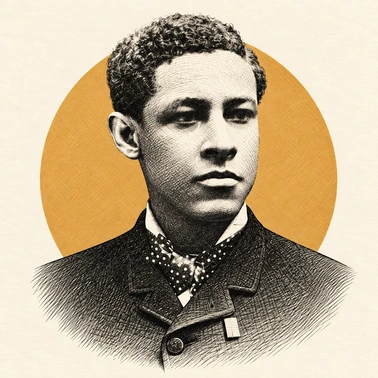
In the shoe factories of nineteenth-century Massachusetts, one step resisted mechanization longer than the rest. Lasting, the work of shaping the shoe's upper around a form and attaching it to the sole, took skilled hand labor, and it limited how quickly factories could produce finished shoes. Jan Ernst Matzeliger, a Black inventor born in 1852 in what is now Suriname, built the machine that automated it.
Matzeliger settled in Philadelphia in 1873 and moved to Lynn, Massachusetts, in 1877 to work in a shoe factory. Lynn was a center of American shoemaking, and its factories hired him for the machine work he had learned in the trade. Working alone, often at night, he studied the lasting process and spent time after his shifts building a mechanical solution; his early model used cigar-box wood, elastic and wire.
On March 20, 1883, he received U.S. Patent No. 274,207 for his lasting machine, which gripped the upper leather, pulled it down over the last and fastened it to the sole in a way that imitated the movements of an experienced hand laster. The invention helped mechanize an important stage of shoe production and made shoes available at lower cost. Matzeliger continued improving the machine's operation.
He died in 1889, at 37, from tuberculosis. The National Inventors Hall of Fame inducted him in 2006, recognizing an invention that changed the economics of the industry he had worked in as a laborer.
Shoes became cheaper and more widely available as mechanization spread through the industry. Matzeliger had arrived in Lynn as an immigrant with mechanical training, and the patent made him a figure in the trade he had entered as a laborer.
He kept refining the machine until his health failed. Lynn's factories adopted it in the years after his death, extending his work far past his short career.