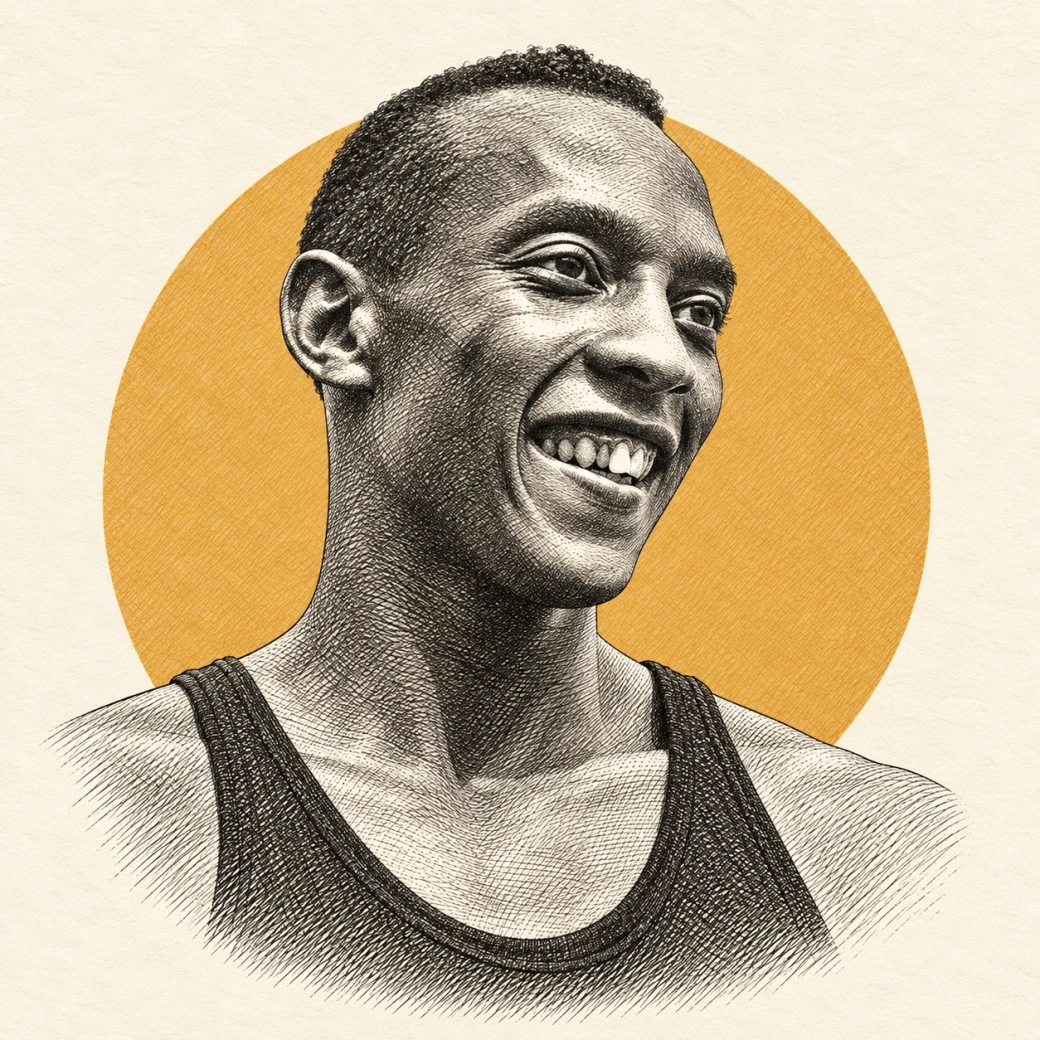
Jesse Owens won four gold medals at the 1936 Olympic Games in Berlin: the 100 meters, 200 meters, long jump and 4 × 100-meter relay. The victories made the Ohio State athlete internationally known at Games staged under Nazi rule. A year earlier, he had set three world records and tied another at a Big Ten meet in Ann Arbor, Michigan. His long jump record from that meet stood for twenty-five years.
Born James Cleveland Owens in Oakville, Alabama, on September 12, 1913, he moved with his family to Cleveland in 1922. Coach Charles Riley recognized his talent at Fairmount Junior High School. Owens continued competing at East Technical High School and gained national attention before entering Ohio State in 1933. At a national meet in Chicago that year, his performances in the 100-yard and 220-yard sprints put him among the country's leading young runners.
At Ohio State, Owens trained under Larry Snyder while working to support his education. His athletic success took place within a segregated society that restricted Black students and athletes. The May 25, 1935, Big Ten meet brought his sprinting, hurdling and jumping together in a single afternoon. He tied the 100-yard world record and set new marks in the long jump, 220-yard sprint and 220-yard low hurdles. At Berlin the following summer, he added Olympic victories in both individual events and a relay team with Ralph Metcalfe, Foy Draper and Frank Wykoff.
Olympic fame did not remove the barriers Owens faced at home. President Franklin D. Roosevelt did not invite the returning Olympians, including Owens, to the White House. His later work included a national fitness program for Black Americans during World War II and a personnel position at Ford Motor Company in Detroit. After the war, he worked in business and entertainment, including exhibition races against horses. He and his family moved to Chicago in 1949, where he opened a public relations agency.
Owens also worked in youth recreation and international sports outreach. Illinois appointed him to its Youth Commission in 1953. In 1955, President Dwight Eisenhower enlisted him as a goodwill ambassador for travel in Asia, and he continued such tours in later years. President Gerald Ford presented him with the Presidential Medal of Freedom in 1976. Owens died on March 31, 1980. His papers and photographs became part of Ohio State's archives.