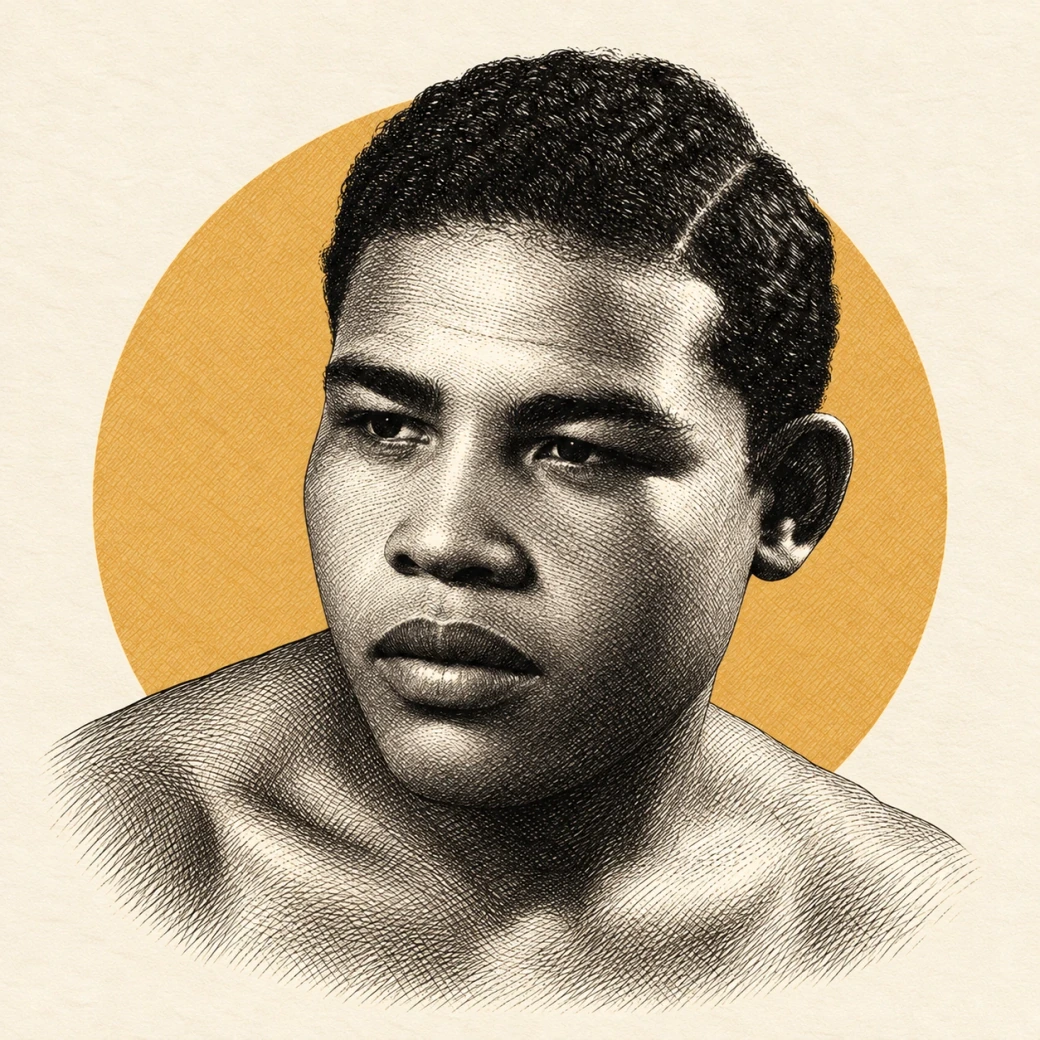
Joseph Louis Barrow, known as Joe Louis, was born in Lafayette, Alabama, in 1914. His family moved north to Detroit, joining the Great Migration. A National Park Service account describes his training at the Brewster Recreation Center and his work at the Ford factory before professional boxing. The route to the ring involved neighborhood facilities and ordinary employment as well as athletic ability. At the Brewster-Wheeler Recreation Center, a boxing program led by Alter "Kid" Ellis drew neighborhood kids, and a teenage Louis spent hours sparring in the building's basement.
Louis became world heavyweight champion by defeating James J. Braddock in June 1937. The National Park Service's Civil Rights Walk of Fame profile explicitly identifies him as an African American champion and places that victory in the period before World War II.
His 1938 victory over German boxer Max Schmeling carried meaning beyond a sporting result. The two met again at Yankee Stadium on June 22, 1938, and Louis ended the rematch with a first-round knockout. The fight carried heavy political significance: the Nazi regime promoted Schmeling as a symbol of Aryan supremacy, while the Park Service describes how the match became associated with opposition to Nazi ideology and made Louis a widely recognized American figure.
During World War II, Louis served in the Army and boxed in exhibitions for troops. An Army historical account records ninety-six exhibitions during his service, including an appearance at Fort Lee in September 1943. It also describes his donation of fight purses to Army and Navy relief organizations, identifiable activities through which his sporting prominence supported wartime morale and assistance.
The same account describes his concern about conditions faced by Black soldiers. His son recalled Louis raising those concerns with Truman Gibson, an adviser to the secretary of war. Louis received the Legion of Merit in 1945.
Louis died in 1981 and was buried at Arlington National Cemetery.