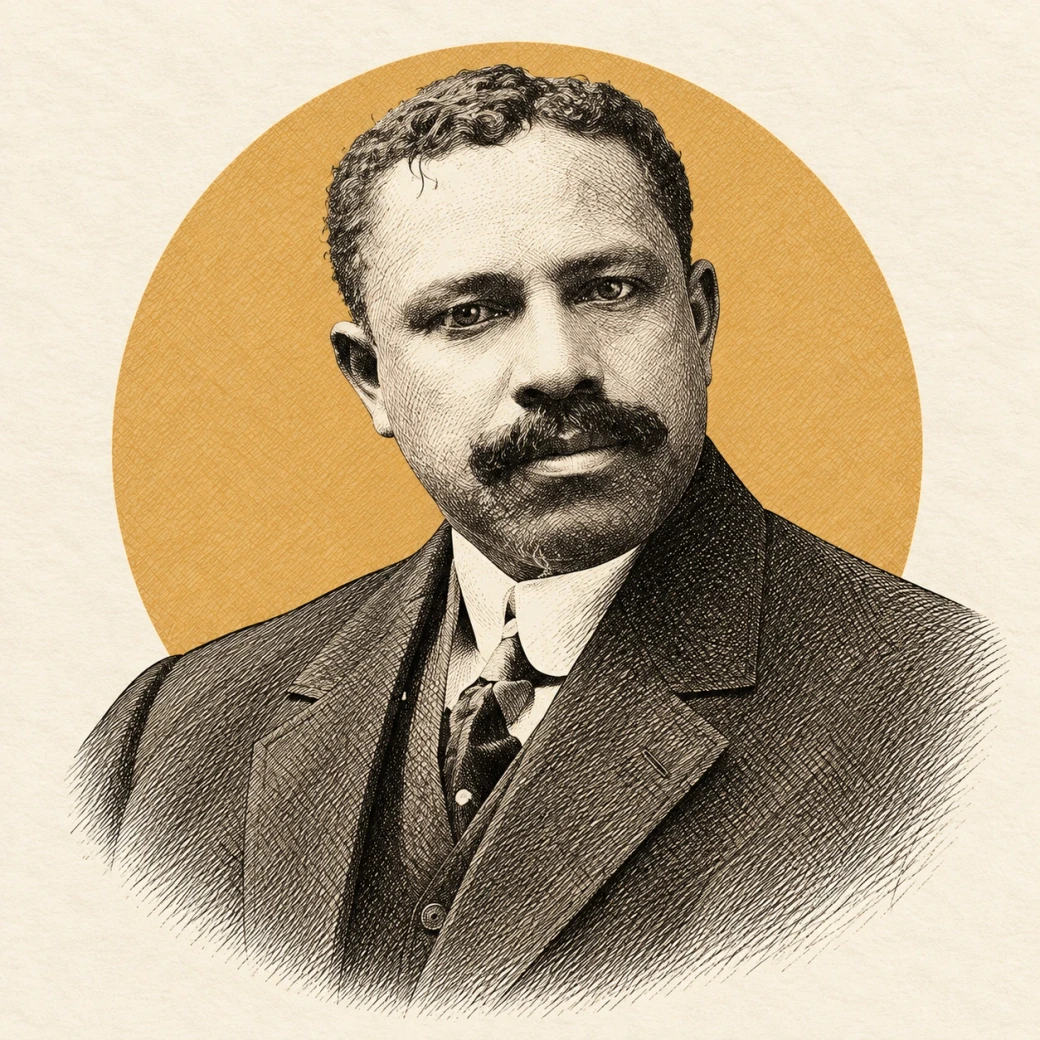
John Merrick was born in North Carolina's Sampson County in 1859, the son of an enslaved mother. After the Civil War, he lived in Chapel Hill, worked in a brickyard and learned to read and write in a Reconstruction-era school. He later became a brick mason in Raleigh, including work on construction at Shaw University. His early working life crossed both manual trades and the expanding institutions of Black education.
Barbering became his route into business ownership. After working in Raleigh, he became a partner in a barbershop that moved to Durham in 1880. He eventually owned several shops serving Black and white customers. He also developed property and gained experience organizing for a fraternal insurance society, activities that preceded the insurance company for which he is best remembered.
In October 1898, Merrick and six other investors met at physician Aaron Moore's office to organize the North Carolina Mutual and Provident Association. The business was incorporated in 1899 and began operating that spring, and it adopted the name North Carolina Mutual Life Insurance Company in 1919. Merrick served as its president until his death that year.
Other participants share the credit. Moore and Charles Clinton Spaulding became central figures in the company's leadership, and its growth was connected with other Durham enterprises, including Mechanics and Farmers Bank. The state historical-marker account places this activity within the development of Durham's Black business community.
Merrick's civic support included St. Joseph's African Methodist Episcopal Church, Kittrell College, Lincoln Hospital and the Durham Colored Library. His business relationships with influential white patrons formed part of the setting. Historian Walter Weare describes a strategy emphasizing self-help and Black institutional development within segregation.
In 1943, a Liberty ship, a merchant vessel, launched in Wilmington bearing his name, a commemoration that continued after his death.