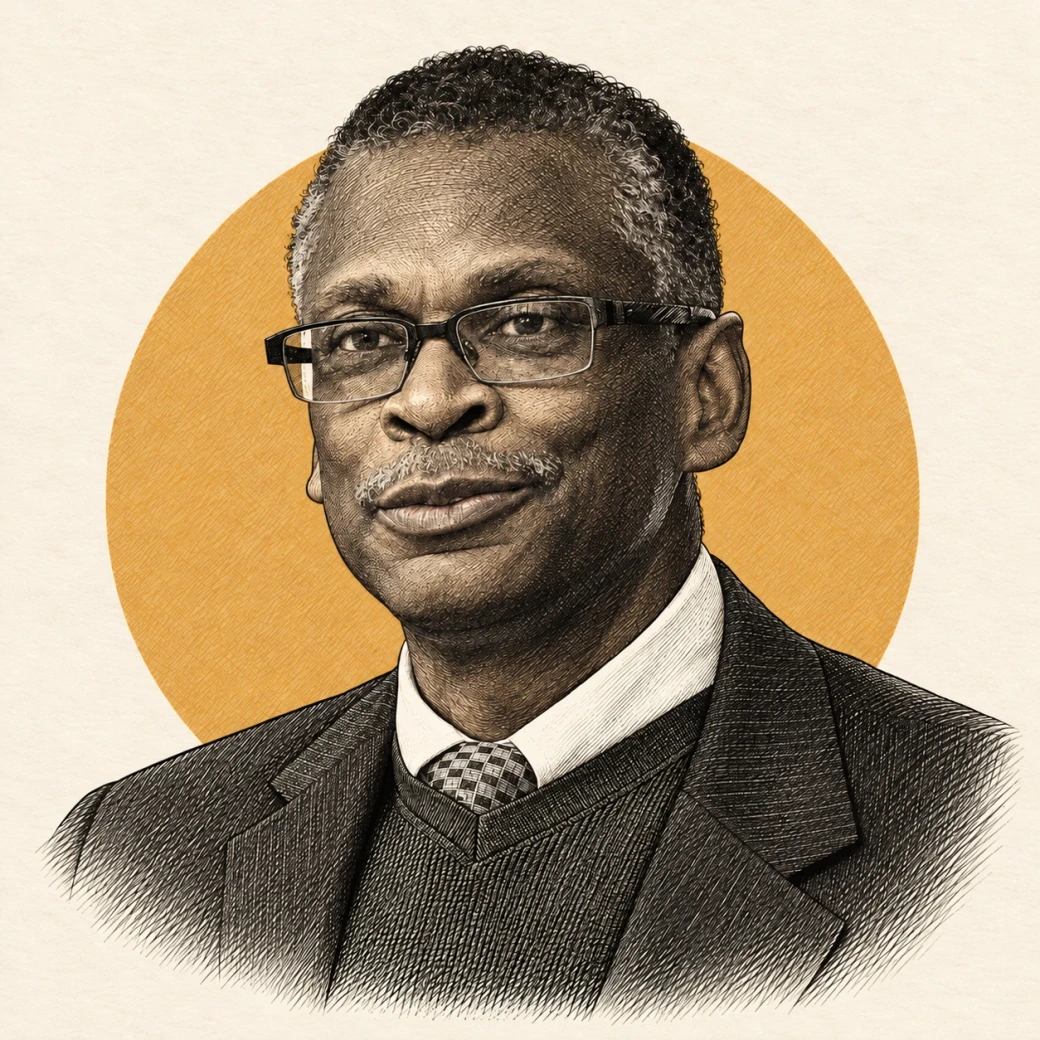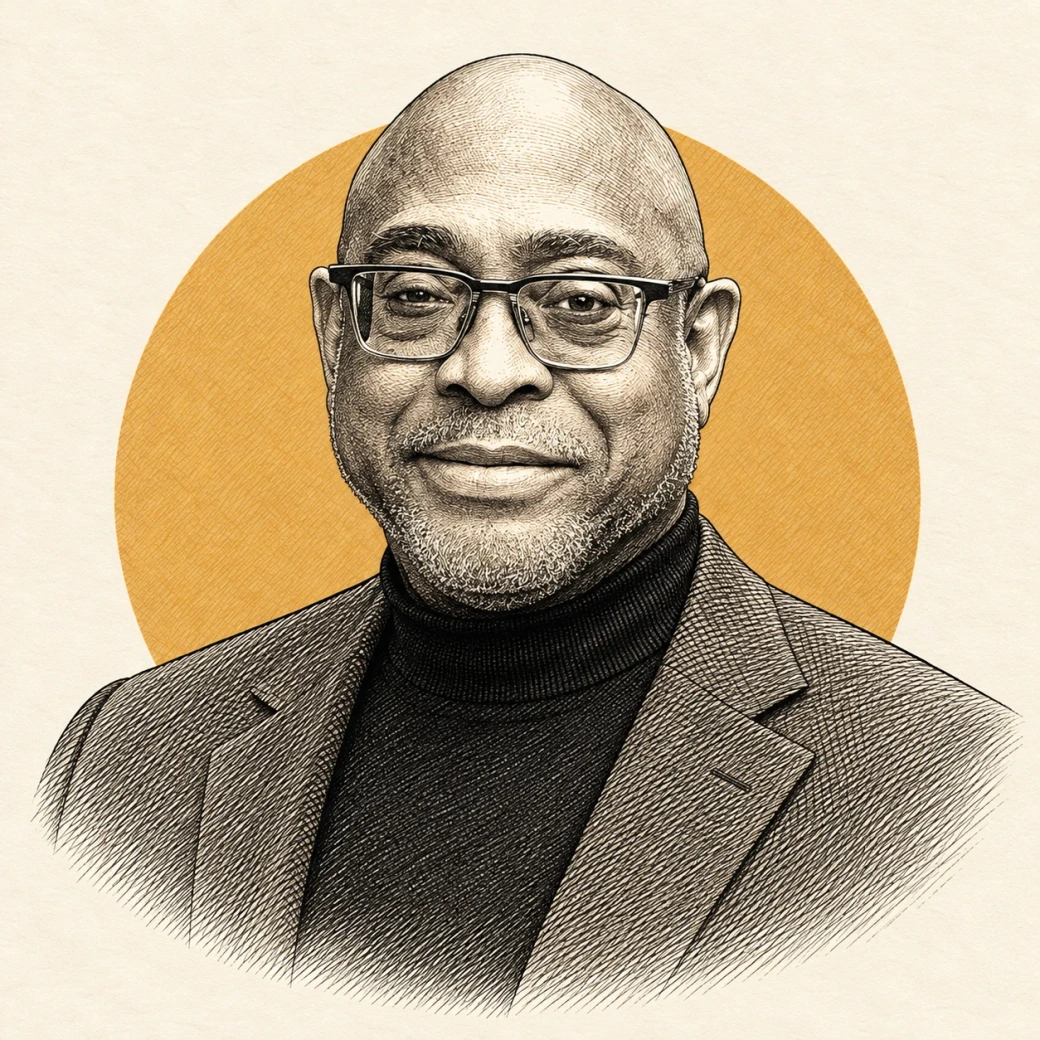
Kevin T. Kornegay is a Black electrical engineer whose research spans communications circuitry and computer security. He earned his bachelor's degree at Pratt Institute in 1985 and completed master's and doctoral degrees at the University of California, Berkeley, in 1990 and 1992. His career has included research at IBM and faculty appointments at Purdue and Cornell.
At Cornell, Kornegay studied integrated circuits operating at radio frequencies for wired, wireless and optical communications. Circuits at radio frequencies are the parts of a device that send and receive signals, and designing them well determines how reliably a phone, a radio or an optical link performs. He also supported the university's student autonomous underwater vehicle team, connecting engineering education with the practical challenges of building machines that operate independently. Cornell documented both activities in 2004, when it also named him one of the nation's top 50 Black researchers.
At Morgan State University, he is the Eugene DeLoatch Endowed Professor, a chair named for the founding dean of the university's engineering school, and he directs the Cybersecurity Assurance and Policy Center. His research interests include hardware assurance, system-on-chip design and secure embedded systems: the electronic components and computing systems built into larger devices such as vehicles, satellites and medical equipment. Hardware assurance asks whether those components will do what they are supposed to do, even when someone attempts to tamper with them.
Kornegay's move to Morgan State placed him in the institution where Eugene DeLoatch had built the engineering school, and the endowed chair bearing DeLoatch's name connects the two careers. His center's hardware-assurance work addresses a growing concern: as cars, satellites and medical devices rely on chips made in complex global supply chains, verifying that the silicon inside behaves as designed has become a security question as well as an engineering one.
Berkeley in the late 1980s and early 1990s was one of the leading centers for integrated-circuit research, and Kornegay's doctoral work came out of that environment. From there he moved through IBM's research division, then into a series of professorships that let him build laboratories of his own. At Morgan State, those laboratories train graduate students in the same specialties he worked in at Cornell.