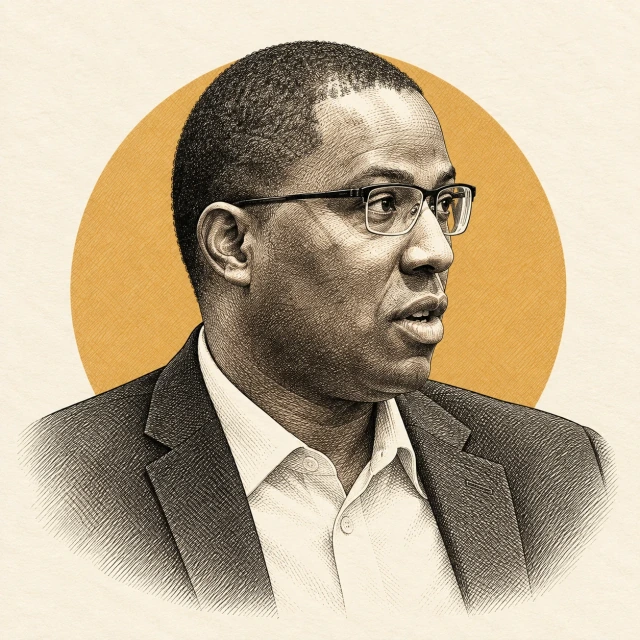
In 1963, the National Association of Manufacturers inducted Samuel B. Fuller as its first African American member. The trade group represented the country's industrial establishment, and its new member had started in business with twenty-five dollars and a load of soap.
Fuller was born in Monroe, Louisiana, on June 4, 1905, to a sharecropper family. He left school after the sixth grade and sold products door to door as a child. The family moved to Memphis when he was fifteen, and his mother died two years later, leaving seven children. The New York Times obituary recorded her influence on his working life: she convinced him that the way out of poverty was door-to-door sales.
He hitchhiked to Chicago and arrived in 1928, working a series of menial jobs before managing a coal yard and then selling insurance for Commonwealth Burial Association, a Black-owned firm. In 1935, he put twenty-five dollars he had borrowed, using his car as collateral, into a load of soap and sold it door to door. The work grew into the Fuller Products Company, offering thirty items from a little-known cosmetics line. As orders accumulated, he began manufacturing his own line of cosmetics and related products.
Chicago's growing South Side Black community gave the company its market. Families moving north during the Great Migration needed goods and merchants of their own in a segregated economy, and Fuller's sales force reached them at their doors. In 1939, the company opened its own factory, making hair-care products, deodorant, hosiery and other items.
In 1947, Fuller bought Boyer International Laboratories, the company that supplied his soap, and at first kept his ownership quiet. When white Citizens' Councils learned that a Black man owned the Nadal product line, they organized a boycott of it.
Growth continued. By 1963, Fuller Products had more than 3,000 sales representatives in 38 states and annual sales above $10 million. Fuller controlled eight other corporations, including Chicago's South Center Department Store, a New York real estate trust, farming and cattle interests and the Pittsburgh Courier chain of newspapers serving Black readers in Chicago, New York, Detroit and Pittsburgh. He also chaired the Negro Chamber of Commerce in Chicago and served as president of the National Negro Business League.
The company trained a generation of entrepreneurs, among them John H. Johnson of Johnson Publishing and George E. Johnson Sr., who later founded Johnson Products. During the Montgomery bus boycott, Fuller and Birmingham businessman A. G. Gaston tried to organize a cooperative purchase of the segregated bus company; Martin Luther King Jr. was skeptical of the idea, and the money never came together.
Health problems led Fuller in 1976 to ask his top distributor, Joe Dudley, to move to Chicago and run the company. Dudley led Fuller Products until 1984, when he purchased it, and his own company kept the Fuller Products name alive afterward. Fuller died on October 24, 1988, at St. Francis Hospital in Blue Island, Illinois. He was 83.