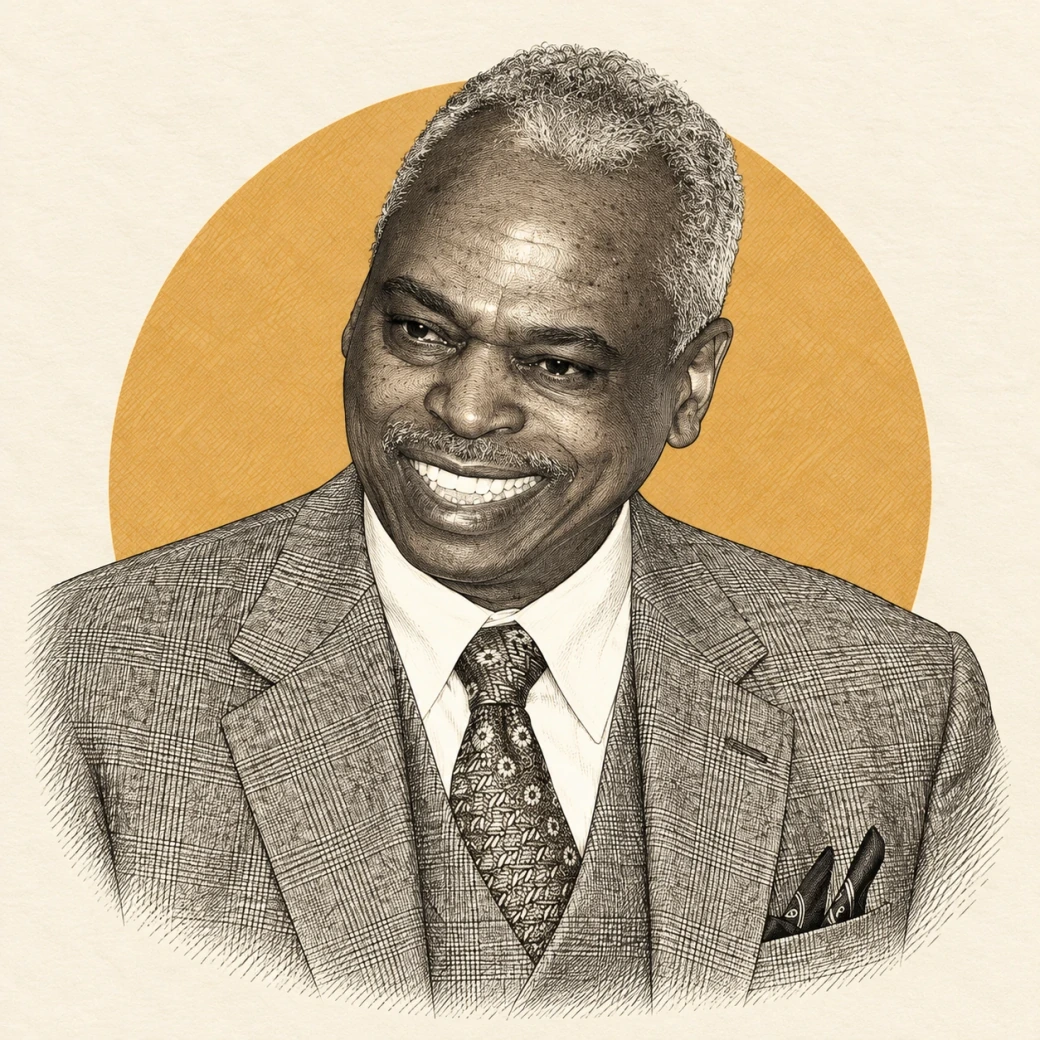
In the spring of 1963, Wade Henderson, fifteen years old and saving from a newspaper route, tried to buy a graduation suit at one of Washington's most expensive department stores. The salesman told him Black customers could not try on clothes there and laughed at him. Henderson ran out, then decided, in his words, that discrimination was not something he would accept. That same year he attended the March on Washington and heard Martin Luther King Jr. speak, while news from Birmingham showed children attacked with fire hoses and police dogs.
Henderson attended Howard University, and in 1969 he heard Rutgers law professor Arthur Kinoy speak at a rally outside the Supreme Court supporting Representative Adam Clayton Powell. Henderson added Rutgers to his list of law schools and enrolled in Newark through its Minority Student Program, where his mentors included Kinoy and program founder Al Slocum. He also audited a class taught by Ruth Bader Ginsburg, then a Rutgers faculty member. After graduating in 1973, the dean asked him to stay as an assistant dean and the program's first director, and he spent two years helping other students of color follow the path he had taken.
His Washington career moved through the field's major institutions: the Council on Legal Education Opportunity from 1976 to 1980, the ACLU's Washington national office as counsel and associate director from 1981, and the NAACP's Washington bureau as director, principal lobbyist and national policy director beginning in 1991. In that role he testified against the nomination of Clarence Thomas to the Supreme Court and, years later, supported the nominations of Sonia Sotomayor and Ketanji Brown Jackson.
From 1996 to 2017, Henderson led the Leadership Conference on Civil and Human Rights, a coalition of more than 230 national organizations that has worked for passage and implementation of every major civil-rights law since 1957. His legislative advocacy included the 1988 Fair Housing Amendments Act, the 1986 immigration measure known as Simpson-Mazzoli and the 2006 reauthorization of the Voting Rights Act. He supports a fund named for Slocum that finances social-justice internships for Rutgers law students. His later work included international discussion of civil rights: he participated in a 2018 Berlin conference on confronting antisemitism and intolerance.