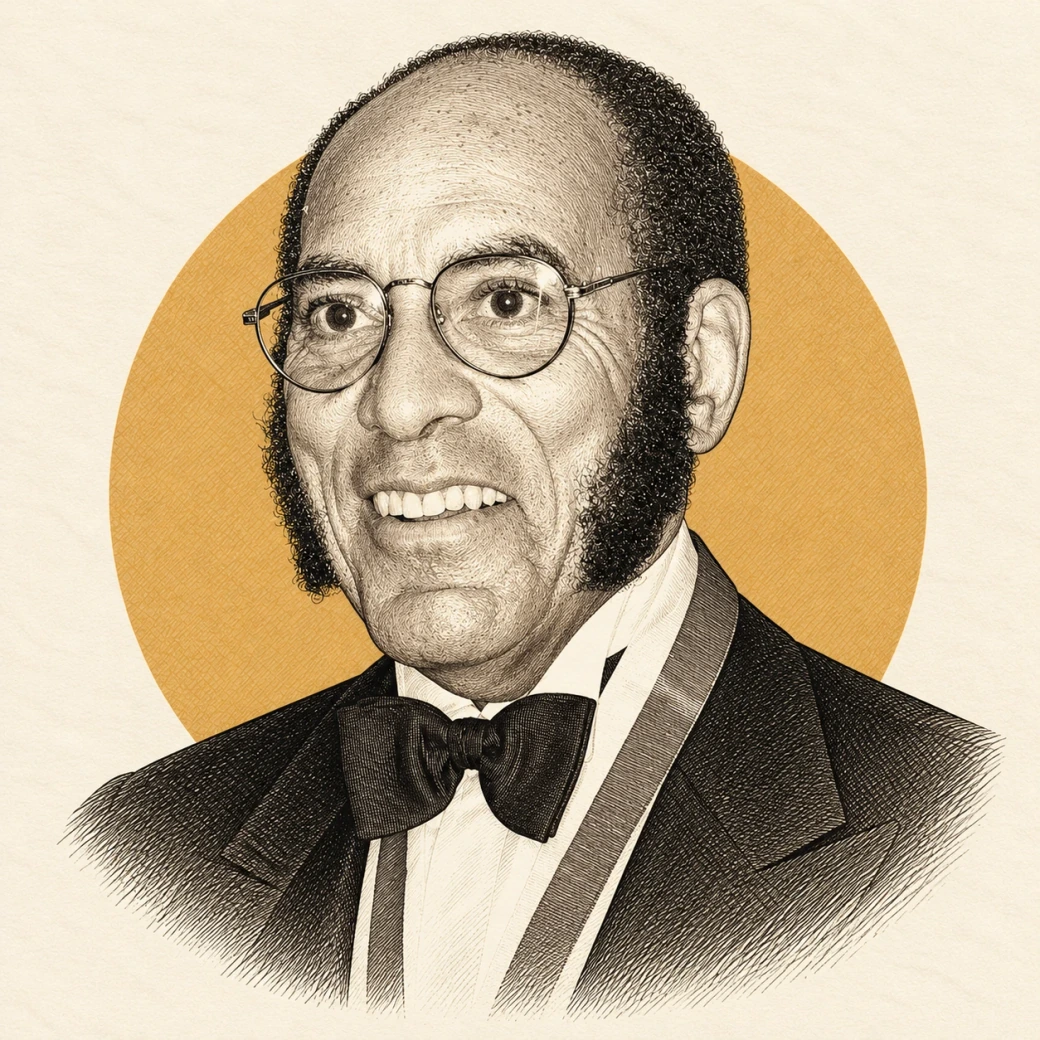
In 1956, Wiley A. Branton Sr. filed suit for Black families seeking to desegregate Little Rock's public schools. A lawyer in Pine Bluff, Arkansas, he worked with Thurgood Marshall and the NAACP legal team as the litigation continued through the crisis at Central High School. The dispute reached the Supreme Court in Cooper v. Aaron in 1958, with Marshall presenting the argument. Branton's work for the students and parents brought him into a national network of civil-rights lawyers and organizers.
Branton was born in Pine Bluff on December 13, 1923. He attended segregated schools and Arkansas Agricultural, Mechanical and Normal College, now the University of Arkansas at Pine Bluff. Drafted into the Army in 1943, he wrote to the government protesting the treatment of Black soldiers. After returning home, he worked in his family's taxicab business and helped Black residents register and learn how to vote. Distributing sample ballots as part of that work led to an election-law conviction, which the Arkansas Supreme Court upheld.
In 1948, he accompanied Silas Hunt to Fayetteville as Hunt sought admission to the law school, a step toward breaking the University of Arkansas's color line. Branton entered the law school himself in 1950, becoming one of the students later recognized as its Six Pioneers. After earning his law degree, he practiced in Pine Bluff. His clients included criminal defendants and civil-rights activists, among them Freedom Riders arrested in Mississippi for challenging segregation in public transportation and accommodations.
In 1962, Branton became the first executive director of the Voter Education Project in Atlanta. The project supported registration work by several civil-rights organizations across the South. In Mississippi, it routed funding through the Council of Federated Organizations, supporting organizers working in communities where registration brought threats and violence. Branton had to manage disagreements between funders seeking measurable results and organizers facing barriers that could not be removed quickly. He directed the project until 1965.
He then worked on federal civil-rights implementation, followed by leadership of Washington's United Planning Organization and the Alliance for Labor Action's social-action program. Branton became dean of Howard University School of Law in January 1978 and served until September 1983. He subsequently joined Sidley & Austin's Washington office and continued practicing until his death on December 15, 1988. Howard's law journal holds a symposium in his name, with the spring issue devoted to the scholarship developed through that program.