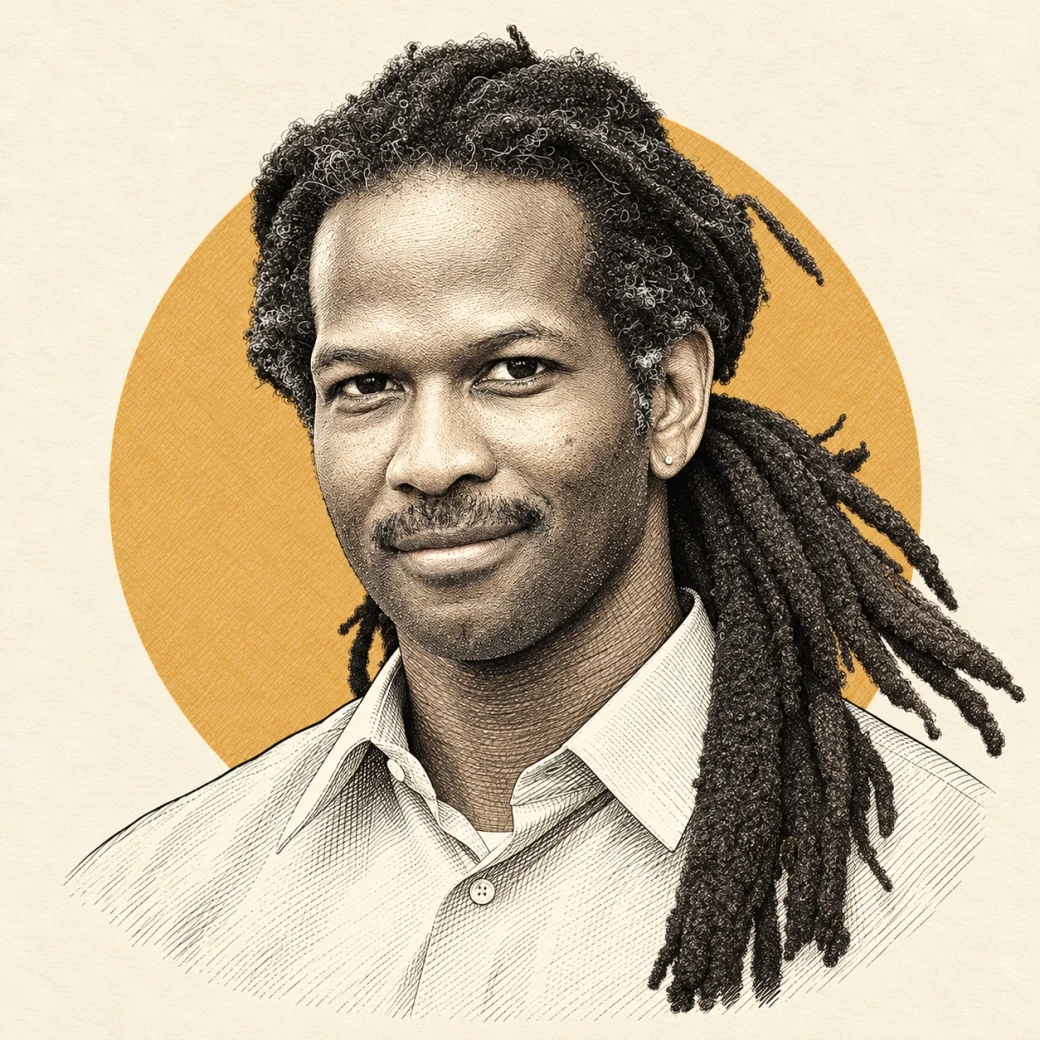
Carl L. Hart is a psychologist and neuroscientist who studies how psychoactive drugs affect human behavior. Columbia University identifies him as the Mamie Phipps Clark Professor of Psychology, with an appointment in psychiatry. His laboratory research examines how people choose to take drugs and how those choices change with their surroundings and the alternatives available to them.
Hart grew up in Miami, where poverty, violence and drug use affected people close to him. Military service and education were part of his route into science. He earned a bachelor's degree in psychology from the University of Maryland, followed by a master's degree in psychology and neuroscience from the University of Wyoming in 1994. He completed his doctorate there in 1996. Wyoming later named him an Outstanding Alumnus of its College of Arts and Sciences in 2015.
His research includes collaborative studies of cannabis, cocaine and methamphetamine. A 2001 paper with W. G. van Gorp, M. Haney, R. W. Foltin and M. W. Fischman examined the acute effects of smoked marijuana on complex cognitive performance. Another part of his work concerns the conditions under which people choose drugs over other rewards. In a 2014 interview with the American Psychological Association, Hart described laboratory experiments in which attractive non-drug alternatives shifted participants' choices away from cocaine or methamphetamine. He credited related work by other researchers as well. The experiments measured choices under laboratory conditions, among participants who were not severely impaired.
Hart brought his research and personal history together in High Price, a memoir that received the 2014 PEN/E. O. Wilson Literary Science Writing Award. In the 2014 interview, he argued that drug policy overlooks the effects of poverty and racial disparities in enforcement. He advocated decriminalization and questioned the assumption that drug use alone explains wider social problems. His public arguments draw on his scientific work, and they also express his views about civil liberties, punishment and the role of government.
He continued that public debate in Drug Use for Grown-Ups: Chasing Liberty in the Land of Fear, published in January 2021. The book pairs his arguments against criminalization with his own account of using drugs, which he has discussed openly. In it, he makes the case that responsible adult use is possible, a position he grounds in his own experience and his reading of the evidence.