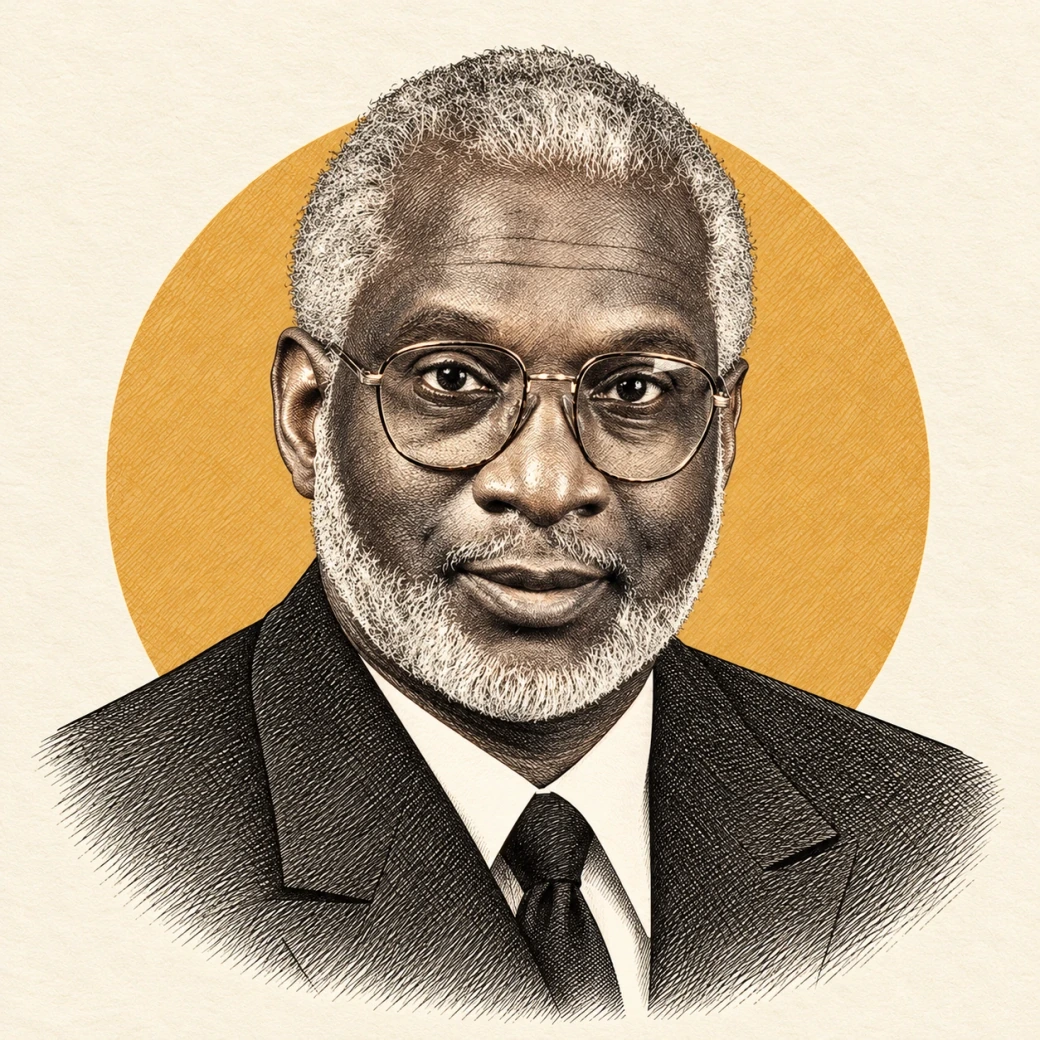
David Satcher was born in Anniston, Alabama, in 1941 and grew up in the rural, segregated South. The New Georgia Encyclopedia recounts a severe childhood illness treated at home by local physician Fred Jackson. His family credited the doctor with saving his life. Access to medical care was part of Satcher's experience long before he entered the profession himself.
He graduated from Morehouse College in 1963 and earned both a medical degree and a doctorate in cytogenetics at Case Western Reserve University in 1970. The American Medical Association's Journal of Ethics identifies him as the first African American to earn the university's combined MD-PhD. His education brought together patient care and the study of chromosomes.
Satcher completed training at the University of Rochester before moving to Los Angeles in 1972 for a community-medicine fellowship at King-Drew Medical Center. His work there included directing a sickle-cell program and opening a free clinic in a church basement in Watts, specific community and clinical responsibilities preceding his federal appointments.
He later held academic leadership roles at Morehouse School of Medicine and served as president of Meharry Medical College from 1982 to 1993. From 1993 to 1998, he directed the Centers for Disease Control and Prevention and administered the Agency for Toxic Substances and Disease Registry.
As the sixteenth U.S. surgeon general from 1998 to 2002, Satcher addressed issues including suicide prevention, oral health, tobacco use and unequal health outcomes. He simultaneously served as assistant secretary for health from 1998 to 2001, holding two distinct offices.
A 2001 Journal of Ethics profile described eliminating racial and ethnic health disparities as a central goal of his public work. His subsequent institutional work continued to address the problem through education, leadership and research.
In 2006, he founded the Satcher Health Leadership Institute at Morehouse School of Medicine. In 2015, he and former U.S. representative Patrick J. Kennedy launched the Kennedy-Satcher Center for Mental Health Equity. The institute's current history records that related centers came together under the Satcher Institute for Health Equity in 2026.