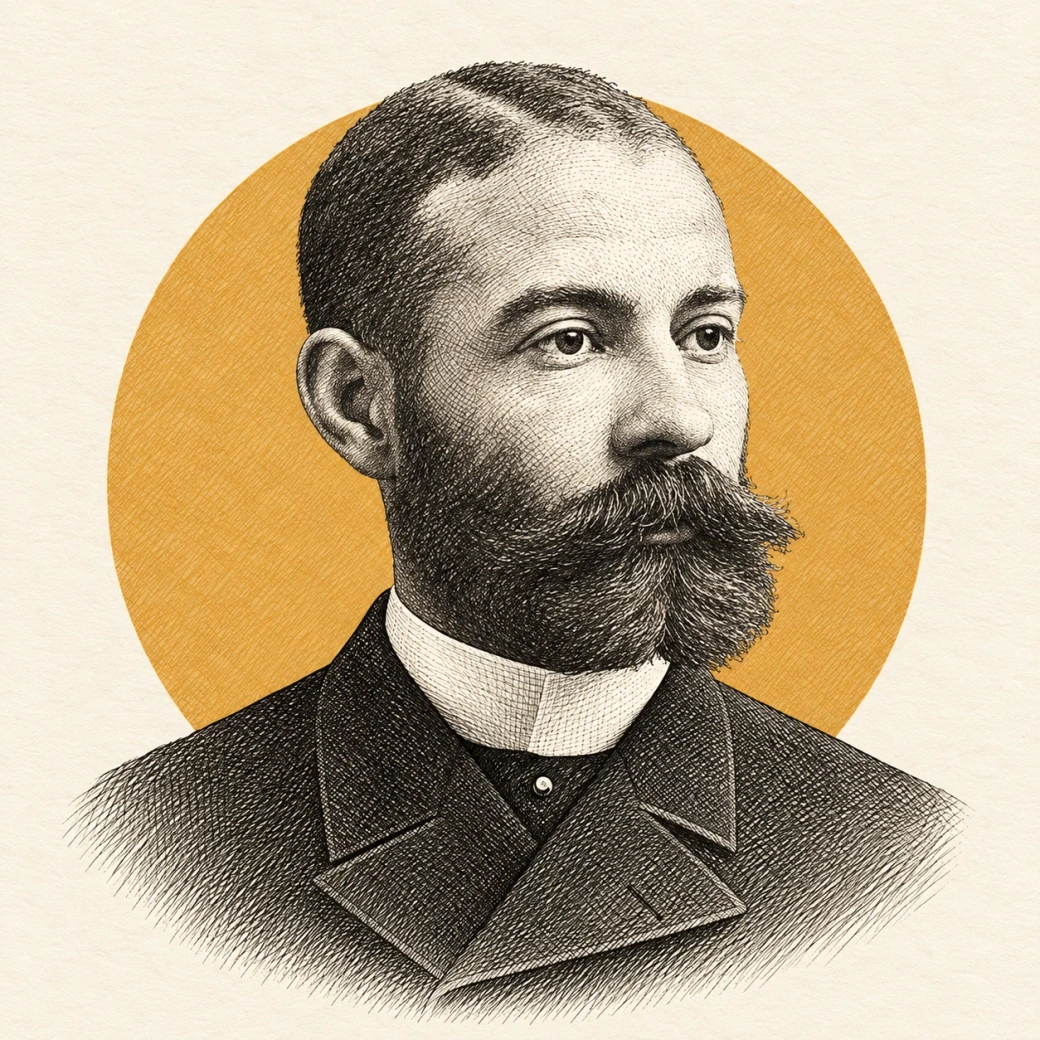
Daniel Hale Williams was born in Hollidaysburg, Pennsylvania, and worked as a shoemaker's apprentice and barber before entering medicine. In Wisconsin, he studied under surgeon Henry Palmer, then enrolled at Chicago Medical College. He completed his medical degree in 1883 and began practice in a city where opportunities for Black physicians were sharply restricted.
His early work included clinical appointments and teaching anatomy. The Provident Foundation's history also describes an important request from Reverend Louis Reynolds: his sister Emma had been refused admission to nursing schools because she was Black. The need for training, as well as patient care, became part of the effort that produced Provident Hospital and its nursing school in 1891.
Provident treated Black and white patients and offered professional opportunities that many other institutions denied to Black doctors and nurses. The American Heart Association's historical account emphasizes that combination of care and training. Williams's role as a founder belongs alongside his surgical achievements, and the hospital's staff and supporting community were part of its history too.
In July 1893, James Cornish arrived at Provident with a chest stab wound. Williams operated, repairing an injured artery and a tear in the pericardium, the sac surrounding the heart. Cornish survived and lived for years afterward. The operation involved repair around the heart rather than surgery inside it, and historians describe it as an important early step in cardiac surgery.
Williams served as surgeon-in-chief at Freedmen's Hospital in Washington, D.C., from 1894 to 1898. There he established an internship program for graduate physicians. In 1895, he helped organize the National Medical Association and became its first vice president, participating in a professional organization open to Black physicians during an era of exclusion.
After returning to Chicago, he continued clinical work and teaching. His career included a long association with Meharry Medical College in Nashville. In 1913, he became the only African American charter member of the American College of Surgeons, a specific institutional milestone recorded by the American Academy of Arts and Sciences.
In 1912, he left Provident for an appointment at St. Luke's Hospital. He later retired to Idlewild, Michigan, and died in 1931.