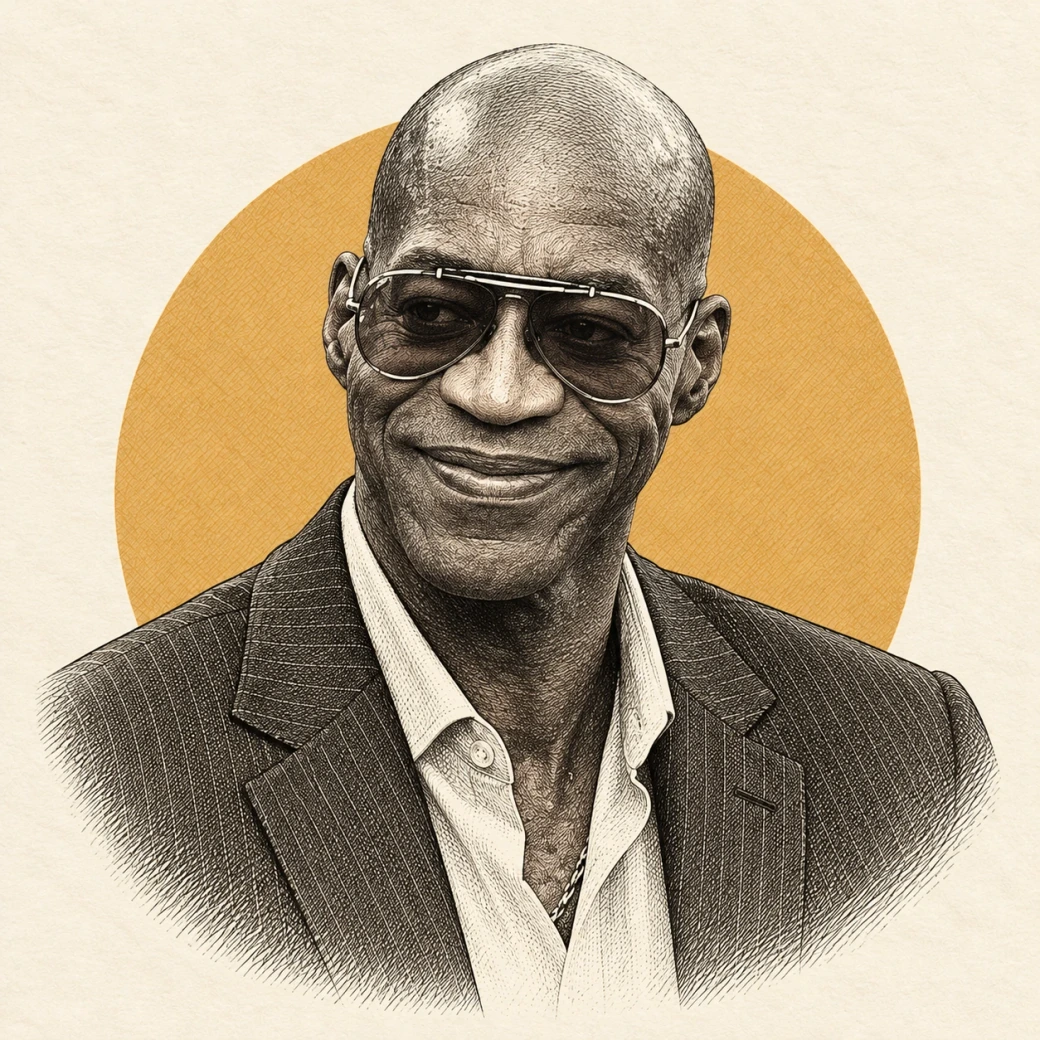
Edwin Moses was born in Dayton, Ohio, in 1955. He attended Morehouse College on an academic scholarship. The college had a track team but no track of its own when he arrived. After competing in several events, he began concentrating on the 400-meter hurdles in 1976. Academic study and athletic development ran side by side from the beginning.
The Montreal Olympics that year were his first international meet. Moses won gold with a world-record time of 47.63 seconds. He had made the team at the Olympic trials, where he ran an American record of 48.30 seconds in the hurdles. He later returned to the Olympic podium with another gold medal in Los Angeles in 1984 and bronze in Seoul in 1988. Between those appearances, the United States boycott kept him from competing at the 1980 Moscow Games despite having made the team.
His winning streak lasted almost a decade before ending in 1987. Between 1977 and 1987, Moses won 122 consecutive races in the 400-meter hurdles, including 107 finals, and set the world record in the event four times. The streak ended on June 4, 1987, in Madrid, when fellow American Danny Harris beat him.
Moses completed his bachelor's degree in physics at Morehouse in 1978 and earned an MBA from Pepperdine in 1994. Morehouse later named its track for him.
In an interview published by Duke Law, Moses described the calculation behind taking thirteen steps between hurdles, covering how the steps were applied as well as their number. He also discussed the conditioning that preceded faster work in his annual training.
His institutional work included collaboration on out-of-competition drug-testing programs and participation in anti-doping organizations. The U.S. Anti-Doping Agency credits him with pioneering the development of anti-doping policies and testing procedures, and Duke's account identifies him as USADA's chairman emeritus. He served on the International Olympic Committee's Athletes' Commission from 1981 through 1996. Laureus documents his leadership in sport while distinguishing his earned degrees from an honorary doctorate.