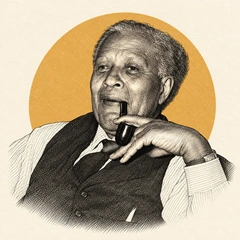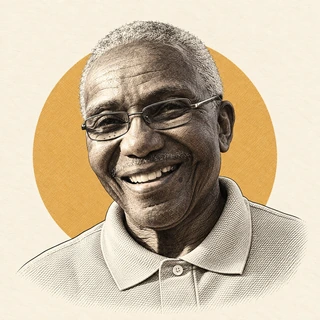
Black students long faced closed doors in American engineering education, and the institutions that served them often had to build what other universities already had. Eugene M. DeLoatch spent his career doing that building. A 1959 graduate of Lafayette and Tougaloo colleges, he taught at Howard University and chaired its electrical engineering department, one of the country's leading producers of Black engineers.
In 1984, Morgan State University recruited DeLoatch to launch its Clarence M. Mitchell Jr. School of Engineering as inaugural dean. Starting a school of engineering from nothing meant recruiting faculty, designing curricula, winning accreditation and persuading students that a new program could carry them into the profession. Under his leadership, the school connected undergraduate and graduate preparation with a broader effort to increase participation in engineering, and it sent generations of engineers, many of them Black, into industry and graduate study.
His influence reached beyond one campus. In 2002, DeLoatch served as president of the American Society for Engineering Education, becoming its first African American president. The society represents engineering educators across the country, and its presidency gave him a national platform for the questions he had worked on at Morgan State: who studies engineering, who teaches it and who benefits.
DeLoatch also helped establish the Black Engineer of the Year awards, creating another platform for recognition and encouragement. He received that award himself in 2017. At BEYA's fortieth-anniversary gathering in 2026, he was recognized as a cofounder and spoke about continuing the organization's work.
Morgan State's engineering school opened in 1984 with DeLoatch at its head, at a time when Black Americans earned a small share of the country's engineering degrees. A new school at a historically Black university meant that students with ability but without family experience in the profession could find faculty who expected them to succeed. His later roles, from the ASEE presidency to the BEYA awards, extended the same project nationally: making the profession visible and reachable.
DeLoatch's own path showed what the institutions he built were for: a Virginia education, a Howard professorship and then the dean's office at Morgan, with national engineering leadership roles in between. Students who studied under him went on to industry, academia and public service.