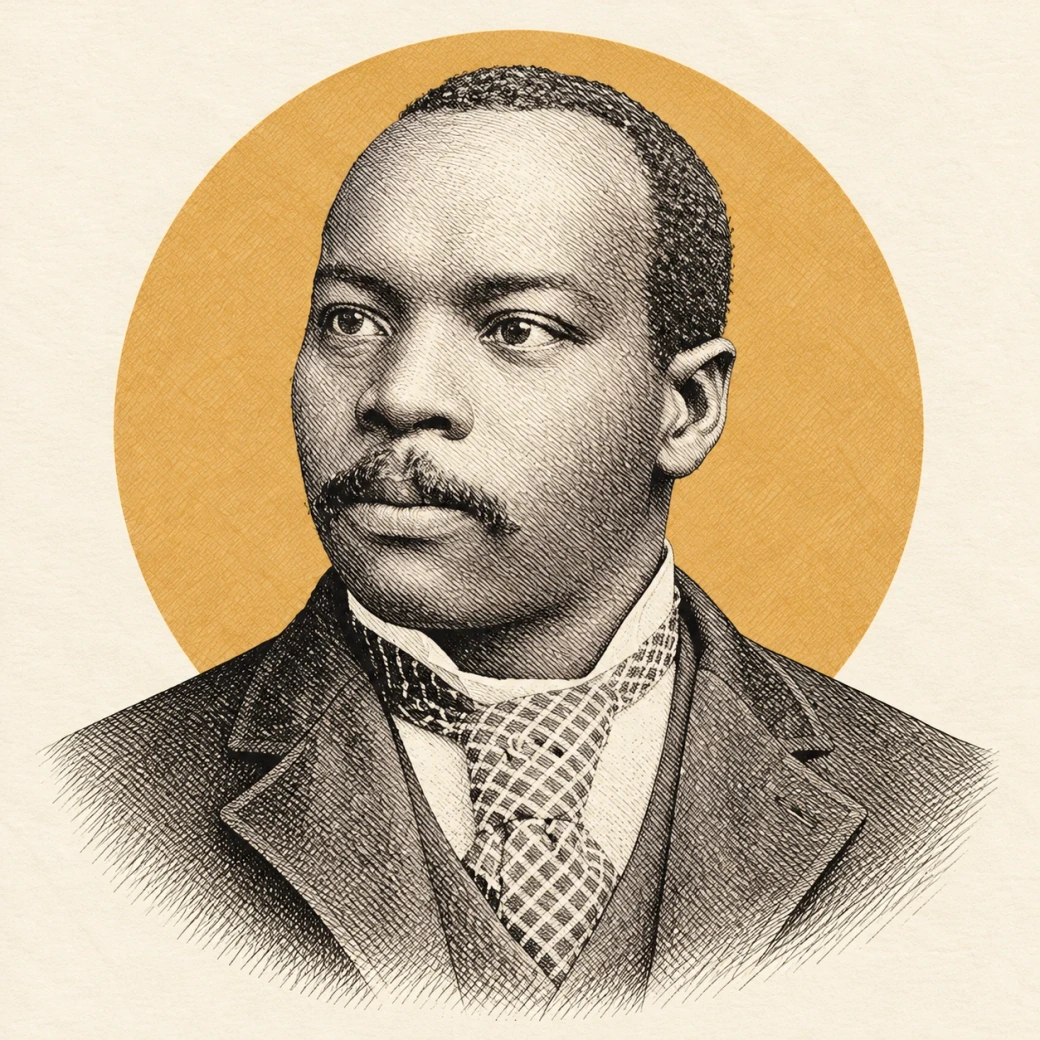
Garrett Augustus Morgan was born in Kentucky in 1877 to parents who had been enslaved. He left home as a teenager and worked in Cincinnati, where he paid a tutor to continue his education. In 1895, he moved to Cleveland. The Encyclopedia of Cleveland History describes sewing-machine work as an early part of his career, preceding the businesses and safety inventions for which he became known.
He opened a sewing-machine sales and repair shop in 1907 and a tailoring business in 1909. His wife, Mary, worked on clothing while he maintained the machinery. Experiments associated with sewing led him toward hair-care products, and he developed another business around them. His working life connected equipment maintenance, manufacturing and consumer products before it extended to public-safety devices.
Morgan received two patents for his breathing device, often called a safety hood, in 1914. The hood let a wearer draw air from near the ground in a smoke-filled environment, below the layer where smoke and toxic gases concentrate. In 1916, an explosion in a waterworks tunnel beneath Lake Erie trapped workmen, and Morgan joined other volunteers using the devices in repeated trips into the gas-filled tunnel. The rescue demonstrated the hood's value in an emergency, and it brought Morgan public attention that his race had otherwise limited.
Selling the invention brought additional obstacles. The National Inventors Hall of Fame describes white buyers who resisted purchasing a product from a Black inventor. Morgan used white representatives in demonstrations and sales efforts, a workaround that acknowledged the discrimination shaping who received a hearing.
In 1923, Morgan patented an improved traffic signal. His hand-operated design included a position that stopped traffic in all directions before allowing one stream to move, giving vehicles time to clear intersections where they needed it.
Morgan also participated in Cleveland's civic life. He helped establish the Cleveland Association of Colored Men in 1908 and founded the Cleveland Call newspaper in 1920. After buying property near Wakeman, Ohio, he established a country club for Black patrons. He died in Cleveland in 1963.
His breathing device became an early version of the gas masks later used by firefighters and miners.