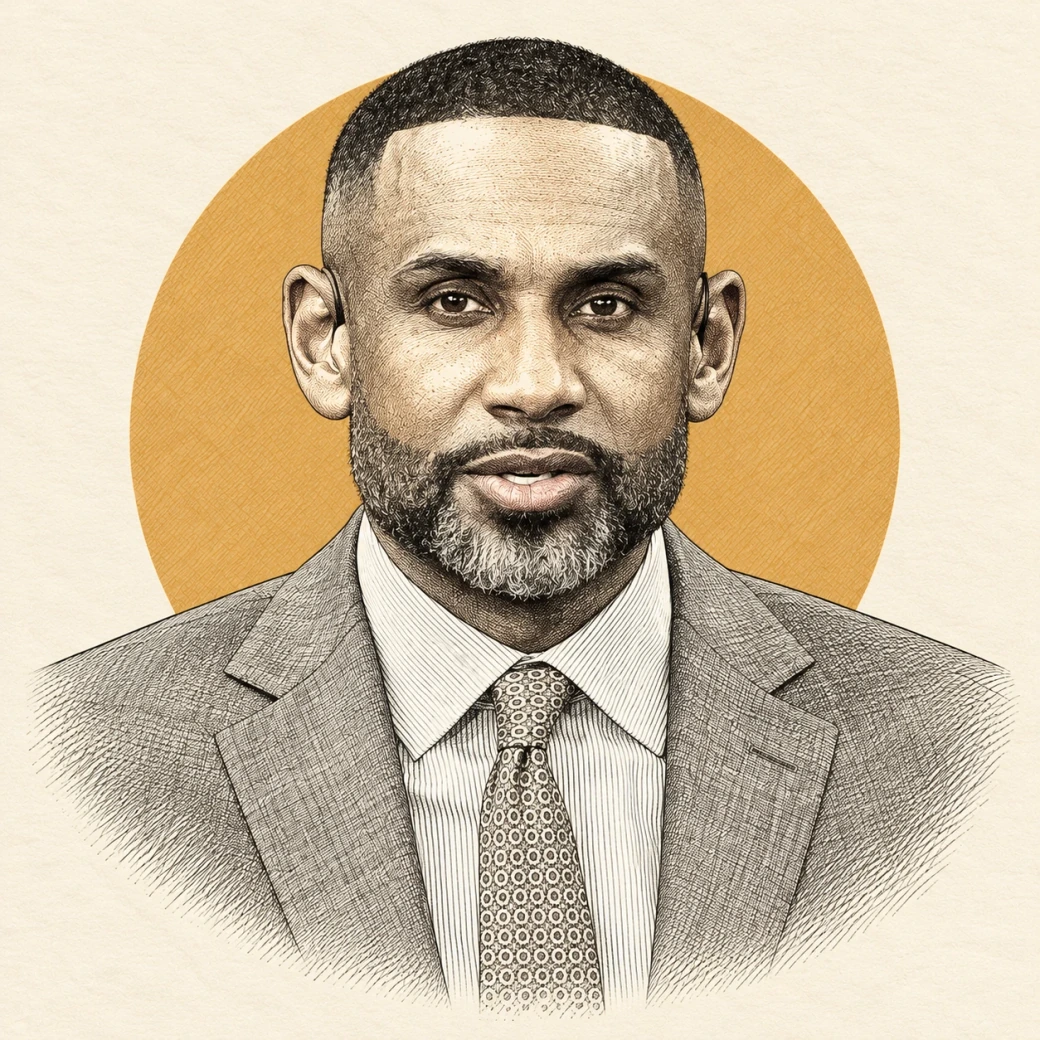
Grant Hill was born in Dallas, Texas, in 1972, the son of Calvin Hill, an All-America football player at Yale and a longtime NFL running back. At Duke University, he contributed to two national basketball championships and three Final Four appearances. He received national recognition for both defense and overall play before Detroit selected him third in the 1994 NBA draft.
Hill became a seven-time NBA All-Star and helped the United States win Olympic gold in 1996. The Basketball Hall of Fame also records three NBA Sportsmanship Awards. His career included Detroit, Orlando, Phoenix and the Los Angeles Clippers, and he entered the Hall in 2018.
Injuries substantially changed that career. He hurt his left ankle during the 2000 playoffs, and operations and setbacks followed. His Orlando years included long absences, among them the entire 2003-04 season. A Washington University review of Hill's autobiography describes the recurring ankle problems and his move to Phoenix, where he played all eighty-two regular-season games in his second season with the team.
The same review explicitly identifies Hill as African American and discusses his reflections on race and belonging. It also links his interest in collecting art to childhood gallery visits with his father.
Hill's official biography describes a traveling exhibition of his collection, titled Something All Our Own. The tour brought African American art to seven cities over nearly three years, drawing on a touring selection of forty-eight collages, paintings, prints and sculptures by African American artists, including Romare Bearden and Elizabeth Catlett. The Dallas Museum of Art, one of the exhibition stops, described the selection as work by nine internationally known and emerging artists. The tour allowed visitors to encounter the artists' work in a public setting rather than leaving it solely in a private collection.
In connection with the exhibition, Hill established a scholarship bearing the same name. His website describes educational assistance for college students interested in visual arts, with a stated aim of helping young people see examples of African American achievement beyond sports and entertainment.