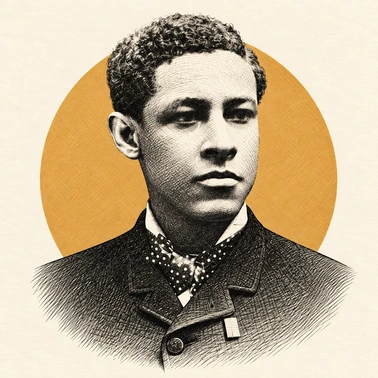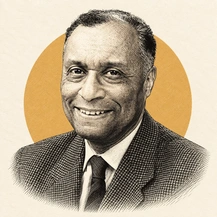
Henry T. Sampson was an African American engineer and historian who lived from 1934 to 2015. His technical career took him from rocket propellant research to satellite engineering, and his second career recovered a record of Black performance that American film history had largely left out.
He earned a chemical engineering degree at Purdue, a master's degree at UCLA and graduate degrees in nuclear engineering at the University of Illinois Urbana-Champaign. His early research at China Lake concerned solid rocket propellants and materials that bonded propellant to a rocket motor's case, work on the substances that send rockets off the launch pad.
In 1971, Sampson and George H. Miley jointly patented an improved gamma-electric cell, a device that converts energy from gamma radiation into electrical output. Its proposed uses included radiation detection and auxiliary power for nuclear reactors. The patent concerned energy conversion; Sampson himself rejected the often-repeated claim that he invented the cellphone.
At Aerospace Corporation, Sampson led engineering work supporting satellite planning, development, launch and operation. Satellites fail in ways ground machines do not, and the engineering around them spans the whole life of a mission, from design reviews through years of in-orbit operation.
Alongside that career, he researched African American contributions to cinema and the performing arts, producing reference books on a history that had often received limited attention. The two careers shared a habit of careful documentation, one of energy systems and the other of a cultural record.
Sampson's book-length work on Black film history documented actors, films and companies from the earliest years of American cinema, material that standard film references had often omitted. He approached it with the documentation habits of an engineer, and the resulting reference works have served later scholarship on early Black cinema.
The two careers shared a method: gather the record, verify it and publish it where others can use it.