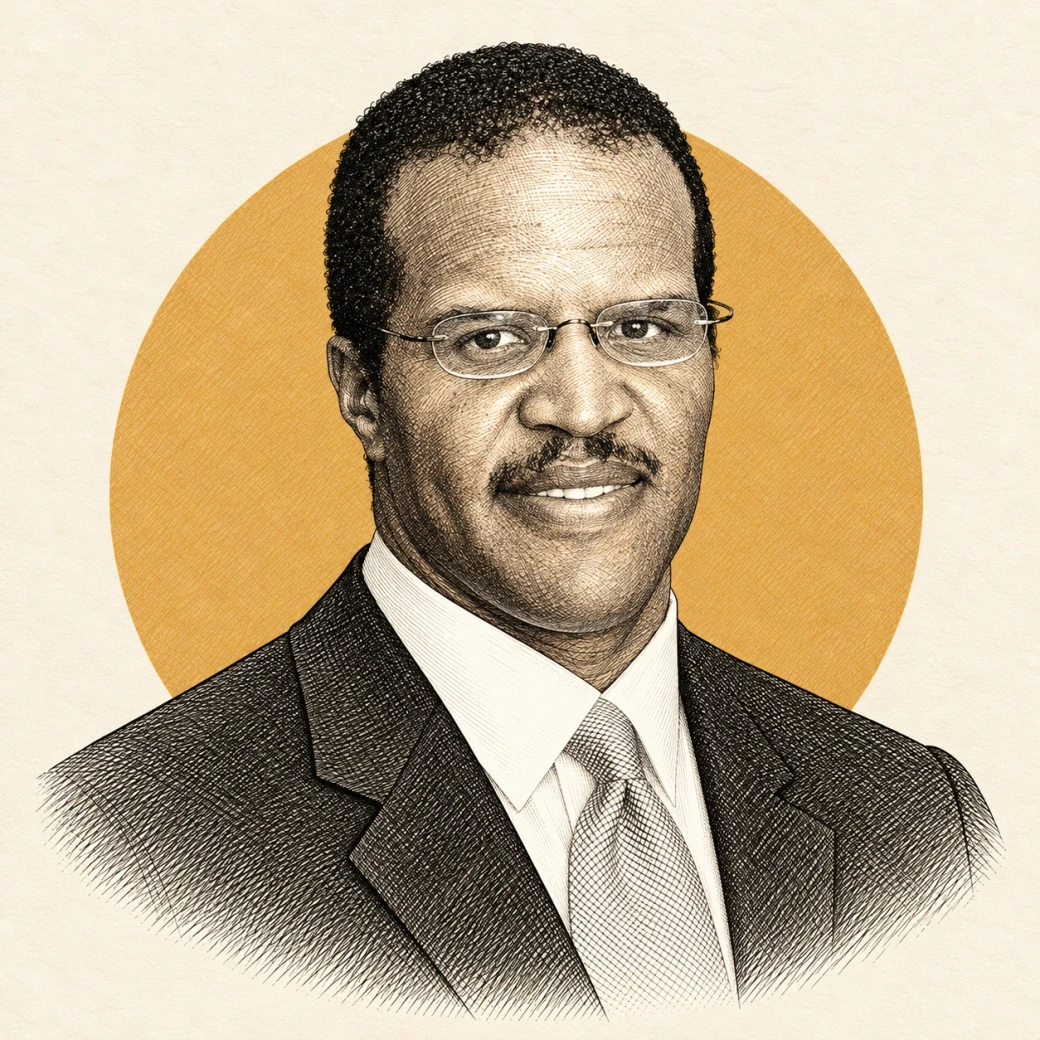
When John Hope Bryant was a nine-year-old student in South Central Los Angeles, a banker came to his school and taught a class in financial literacy. Operation HOPE's account of his life credits that classroom visit with changing his direction. Bryant was born in Los Angeles on February 6, 1966, and raised in Compton.
On May 5, 1992, days after the April unrest in Los Angeles, Bryant founded Operation HOPE. The organization describes that moment as the starting point for its mission of financial education and inclusion, and its history page dates the founding to immediately after what it calls the worst urban riot and civil unrest in U.S. history. Bryant has built his public career around it, as an entrepreneur, author and nonprofit leader, and continues to serve as the organization's founder, chairman and chief executive officer.
The organization's biography records his work as an author, including Love Leadership, How the Poor Can Save Capitalism and The Memo. His publisher and professional biography add Up From Nothing and Financial Literacy for All, describing six books on economic empowerment. Those books form part of his public discussion of economic opportunity.
In October 2022 in Stone Mountain, Georgia, Operation HOPE reported that Bryant and Wells Fargo chief executive Charlie Scharf opened a redesigned bank branch with a HOPE Inside center and a financial coach employed by the nonprofit. The program offered education and guidance for community members, including help understanding and improving credit. The project depended on the partnership between the bank and the nonprofit, with coaching delivered by staff, providing access to coaching rather than guaranteed financial results for participants.
Forbes has recognized Bryant among its 250 Greatest Self-Made Americans, an honor the organization notes alongside more than three decades of financial literacy work. The coaching model that began with one classroom visit in the 1970s now runs through HOPE Inside centers inside bank branches, the same setting where he first encountered the subject.