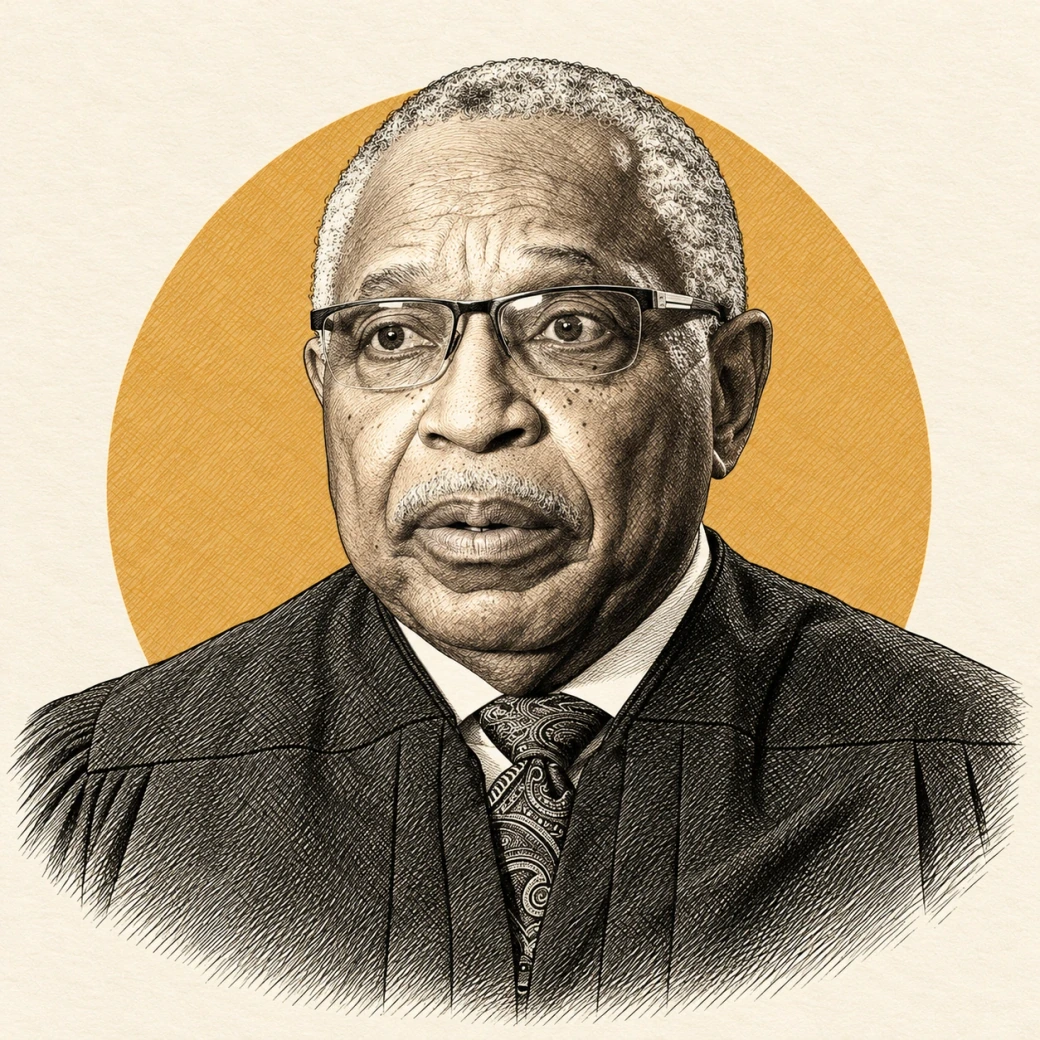
As a young associate at Wilmer, Cutler & Pickering, John Payton worked with Lloyd Cutler on the NAACP's defense in a case over a Mississippi boycott. In 1982, the Supreme Court's decision in NAACP v. Claiborne Hardware Co. protected nonviolent political boycotts under the First Amendment. Payton had joined the firm in 1978. Three decades later, he would leave it to lead the NAACP Legal Defense and Educational Fund.
Payton grew up in Los Angeles and attended Pomona College, where he helped establish the Black Student Union and the Intercollegiate Black Studies Center. After graduating in 1973, he went to Harvard Law School. His work there included assisting Black protesters injured during Boston's school-desegregation conflict. He earned his law degree in 1977 and clerked for federal judge Cecil Poole before moving to Washington to join the firm.
Commercial litigation remained a substantial part of his practice. His cases included defamation, partnership disputes and discrimination claims. He also continued taking civil-rights matters and mentoring younger lawyers. From 1991 to 1994, he took leave to become the District of Columbia's corporation counsel. After returning to private practice, he headed the firm's litigation department from 1998 to 2000 and was D.C. Bar president from 2001 to 2002.
Beginning in 1997, Payton led the firm's representation of the University of Michigan in challenges to its consideration of race in admissions. The cases went from trial courts to the Supreme Court. The results in 2003 differed: Grutter v. Bollinger upheld the law school's individualized admissions approach, while Gratz v. Bollinger, which Payton argued before the justices, rejected the undergraduate points system.
Payton became LDF's sixth president and director-counsel in 2008. He led an organization whose work covered voting rights, education and employment discrimination. During his tenure, its cases included Northwest Austin Municipal Utility District Number One v. Holder and Lewis v. City of Chicago. In Lewis, which he argued in 2010, the Supreme Court unanimously ruled that Black firefighter applicants had filed a timely discrimination charge. That decision allowed their challenge to a hiring test to proceed.
He remained LDF's leader until his death on March 22, 2012, at sixty-five. Pomona later established a distinguished lectureship in his memory in 2017. The college's trustees endowed it to remember his life and career, and to honor Pomona president David W. Oxtoby.