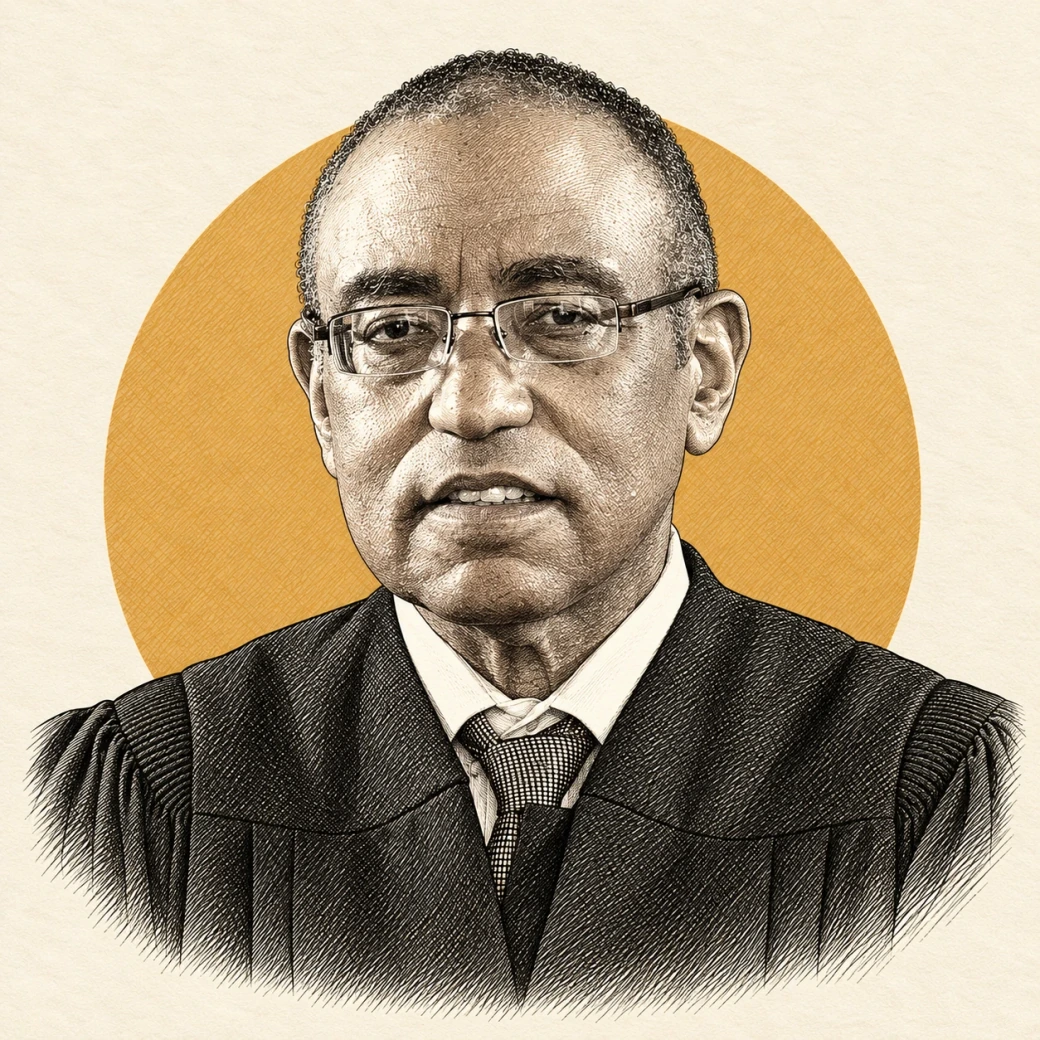
Myron H. Thompson was thirty-three when President Jimmy Carter nominated him to the federal district court in Montgomery, Alabama. The seat had been held by Frank M. Johnson Jr. Thompson received his commission in September 1980, beginning a tenure that would span more than four decades in a courthouse closely associated with the state's civil-rights history.
Born in Tuskegee in 1947, Thompson contracted polio as a child. Yale's account of his early life describes an interest in music and a growing enthusiasm for school after his third-grade teacher placed him in an advanced reading group. He graduated as salutatorian from Tuskegee Institute High School. He then studied political science at Yale, earning his bachelor's degree in 1969 and his law degree in 1972.
Thompson returned to Alabama to work as an assistant attorney general from 1972 to 1974. Private practice followed, along with work on access to legal representation. In 1977, he became a founding director and board chair of the Alabama Legal Services Corporation, which provides legal support to people with low incomes. His federal appointment came three years later. The Senate confirmed him on September 26, 1980; his commission followed on September 29.
He served as chief judge of the Middle District of Alabama from 1991 to 1998. His judicial work included disputes over voting systems, desegregation and prison conditions. In a 2013 redistricting case before a three-judge panel, he dissented from a decision concerning Alabama's legislative districts, arguing that the state had relied on racial quotas. He assumed senior status on August 22 that year.
Thompson also worked on how the judiciary operates. From 2007 to 2011, he represented the Eleventh Circuit's district judges on the Judicial Conference of the United States. His academic work included a period as a scholar in residence at NYU Law and a Yale lecture on deciding difficult cases in Alabama. Yale Law School awarded him its Award of Merit in 2017, followed by an honorary law degree from the university in 2022.
Away from individual cases, he supported preserving Montgomery's civil-rights sites and restoring his historic courtroom. The Middle District later named that courtroom for him. At the dedication, colleagues and family gathered in the Frank M. Johnson Jr. Courthouse, and Thompson spoke at the close of the ceremony. His portrait and his predecessor's were hung outside the courtroom doors.