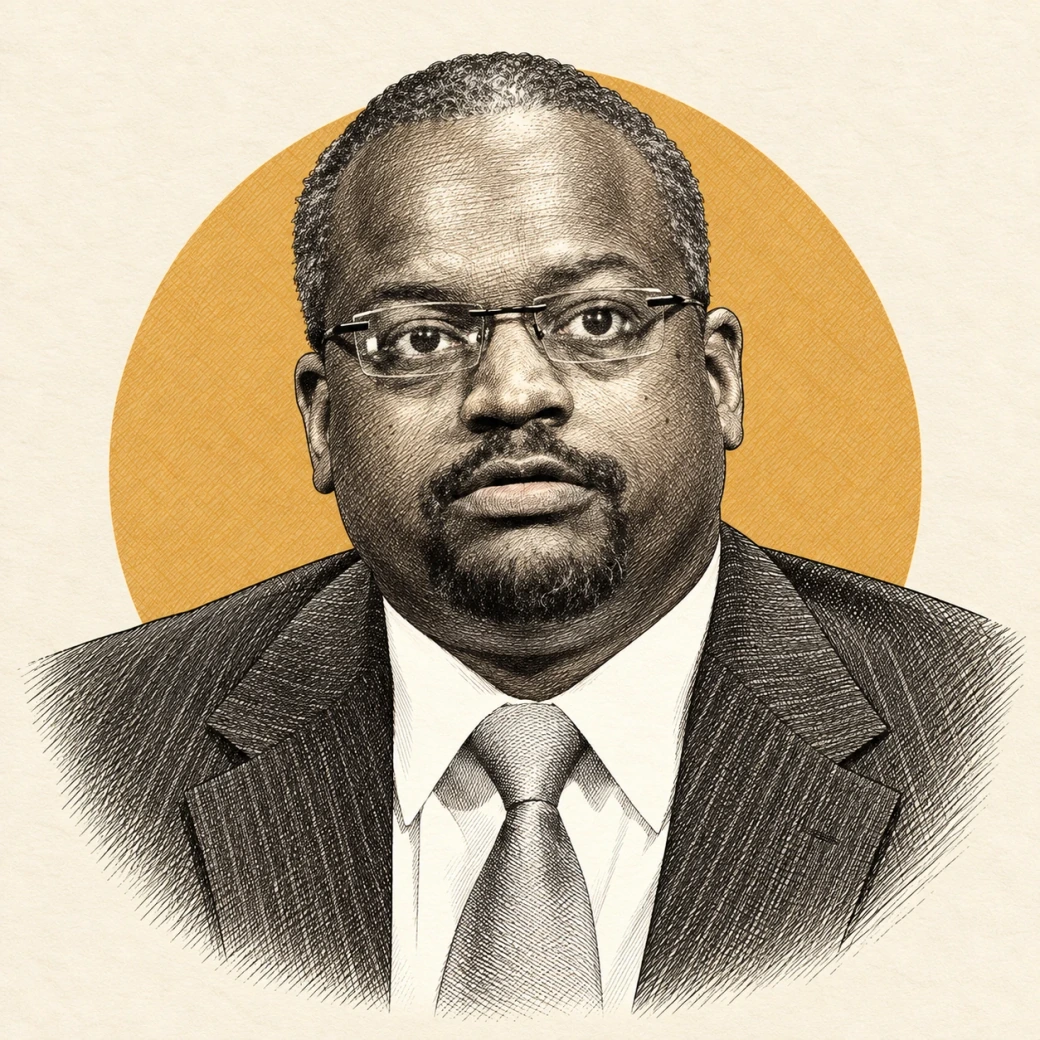
Years before becoming a federal judge, Robert L. Wilkins was a plaintiff in a lawsuit challenging racial profiling on Maryland highways. In a 2014 account, ACLU lawyer Susan Goering recalled how a 1992 police stop and search of Wilkins and his family during a road trip led to the case. The ACLU filed suit in 1993 for the family and other African American motorists. The resulting agreement required Maryland State Police to record searches and provide quarterly reports to the court and the ACLU, creating a documented record of who was being stopped.
Wilkins was born in Muncie, Indiana, in 1963 and studied chemical engineering at Rose-Hulman Institute of Technology, graduating in 1986, before earning his law degree at Harvard in 1989. He joined the D.C. Public Defender Service in 1990, working in its trial and appellate divisions before becoming Special Litigation Chief. In 2002, he became a partner at Venable.
His work also helped bring a museum to the National Mall. After attending a wake in 1996 where congregants shared stories of growing up in the segregated South, Wilkins could not stop thinking about the question, as he later put it: why doesn't the country have a museum to share all these stories? He formed a nonprofit to advocate for the project and left his job to work on it full time, joining forces with Representative John Lewis, who had repeatedly introduced legislation for such a museum since 1988. Opposition was real: Senator Jesse Helms of North Carolina was among the strongest critics in Congress. The coalition Wilkins, Lewis and other civic leaders built reached across both parties, which proved crucial to passing the authorizing legislation. Wilkins chaired the Site and Building Committee of the presidential commission that planned the Smithsonian National Museum of African American History and Culture. Congress authorized the museum in 2003, and it opened on the National Mall in September 2016. Wilkins chronicled the century-long effort in his book Long Road to Hard Truth.
He joined the federal district court in Washington in 2010 and received his commission to the D.C. Circuit in January 2014.