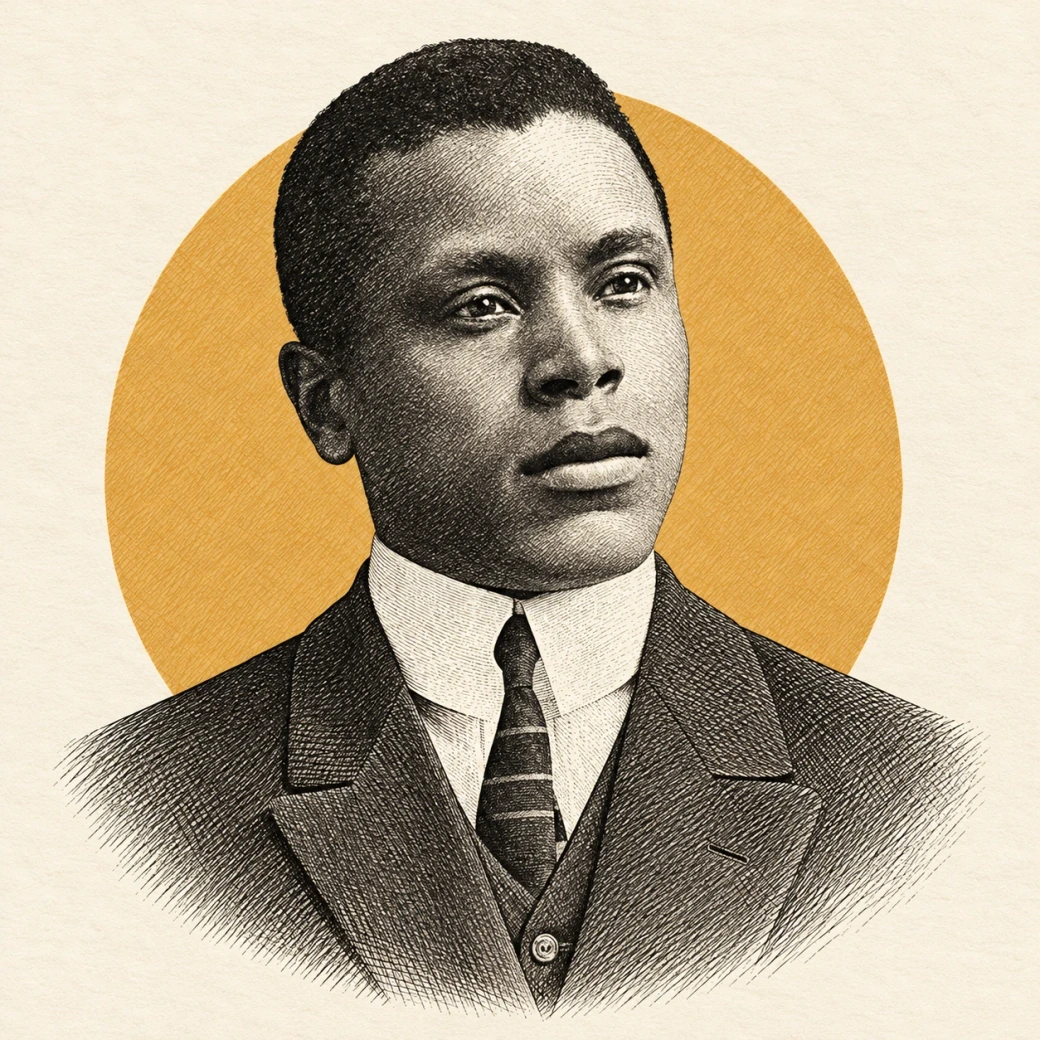
Oscar Micheaux was born in Metropolis, Illinois, in 1884. His parents had been enslaved in Kentucky before moving to Illinois, where the family farmed. The National Park Service explicitly identifies him as an African American homesteader, author and filmmaker. His working life included jobs in Chicago and service as a Pullman porter before he pursued farming in South Dakota.
In 1904, he sought land through a lottery involving homesteads on the Rosebud Reservation. When he did not receive a claim in the drawing, he bought a relinquished homestead. Farming brought both initial progress and damaging drought.
Micheaux turned experience into writing, combining fiction with elements of autobiography. He sold his books directly to readers. The Conquest appeared in 1913 and The Homesteader in 1917. When the Black-owned Lincoln Motion Picture Company proposed adapting the latter, Micheaux wanted to direct it himself. He instead raised money through small share sales and developed his own film production.
The Homesteader reached the screen in 1919 and is now considered lost. His next film, Within Our Gates, was released in 1920. Evelyn Preer played Sylvia Landry, a woman raising funds for a school for Black children. The story confronts racial violence and prejudice, and its release encountered censorship disputes.
Micheaux went through bankruptcy in 1928 and kept making films anyway, across the transition from silent pictures to sound. His work included Body and Soul, Paul Robeson’s 1925 film debut, and The Exile in 1931. Actress Alice B. Russell, whom he married in 1926, appeared in several of his films. He died in Charlotte, North Carolina, in 1951, while traveling for business.
The surviving Within Our Gates also has a restoration history. Film scholar Scott Simmon describes reconstructing its English intertitles from a Spanish print and other evidence.