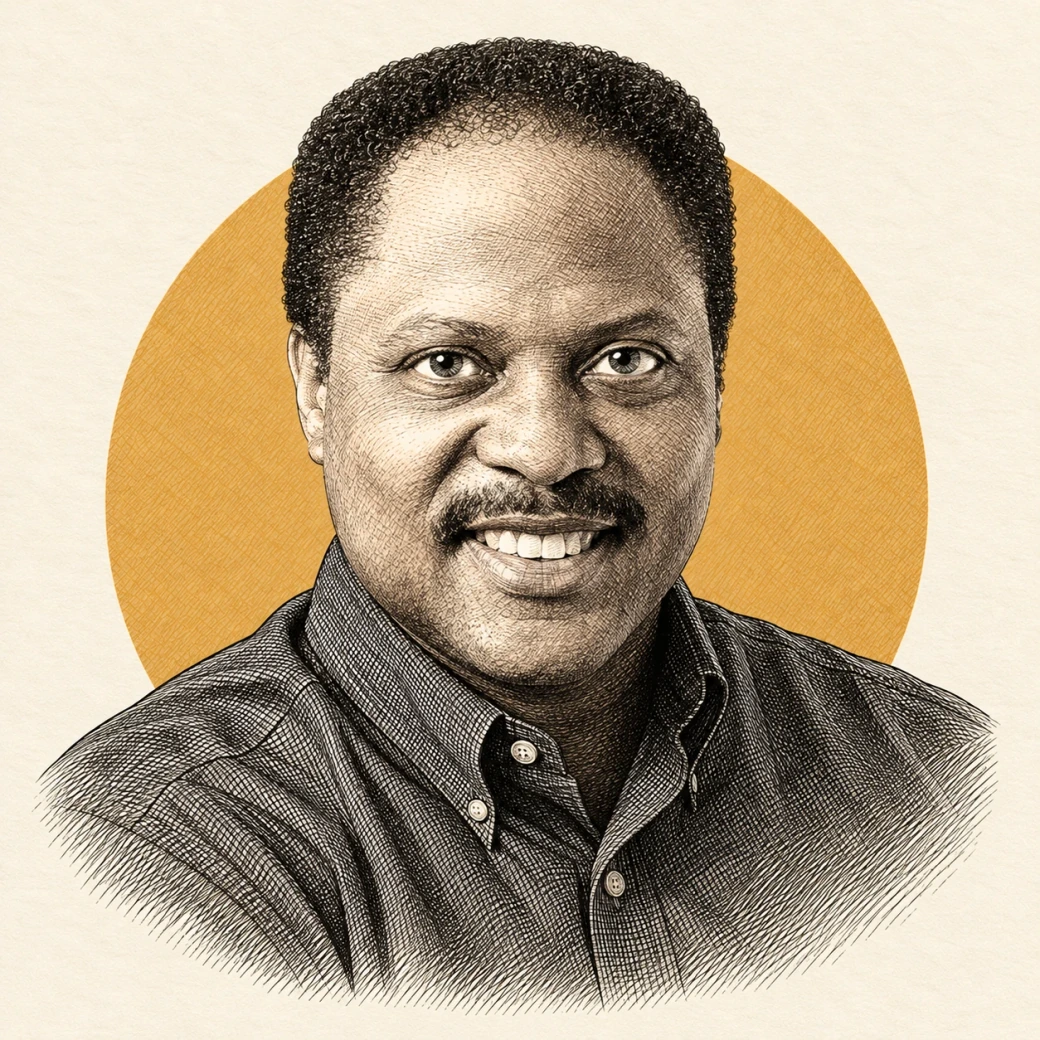
Odest Chadwicke Jenkins, commonly known as Chad Jenkins, studies how robots can learn from people. His path included a master's degree at Georgia Tech and a computer-science doctorate at the University of Southern California in 2003. At USC, he worked with roboticist Maja Matarić on learning from demonstration, a field concerned with how observed human actions can help guide a robot's behavior.
The research combines several kinds of technical work. A robot must perceive its surroundings, recognize useful features of a demonstration and relate them to a task. Jenkins and his collaborators have investigated computer vision, human-robot interaction and mobile manipulation. Michigan's current account places these topics within the Laboratory for Progress, where he leads a team studying how robots can assist people in everyday settings.
A 2013 project offers a concrete example of that purpose. While Jenkins was at Brown University, his team worked with Henry Evans, a man with paralysis, on controlling a camera-equipped drone through head movements. The USC account also describes Evans appearing with Jenkins through a telepresence robot. The demonstrations gave Evans access to spaces his body could not reach.
Jenkins's work extends to the tools and courses other people use. He and colleagues developed rosbridge to help developers communicate with robots through more accessible programming arrangements. He also participated in a BlackInComputing open letter calling for greater opportunity and representation.
At the University of Michigan, he was founding chair of the undergraduate robotics program, whose major launched in 2022. He developed Distributed Teaching Collaboratives, through which universities create and teach courses together. Partners named by Michigan include Morehouse, Howard and Berea College. The approach uses openly available course materials and a format intended to welcome students without earlier programming experience.
In March 2026, Michigan announced his selection as a 2025 Fellow of the Association for Computing Machinery, citing both robot learning and efforts to broaden participation in robotics and AI. Jenkins's own comments emphasized the collaborators involved in the work.
The 2022 major launch gave Michigan an undergraduate robotics degree at a time when few universities offered one, and the teaching collaboratives he built extended the same access effort to partner universities.