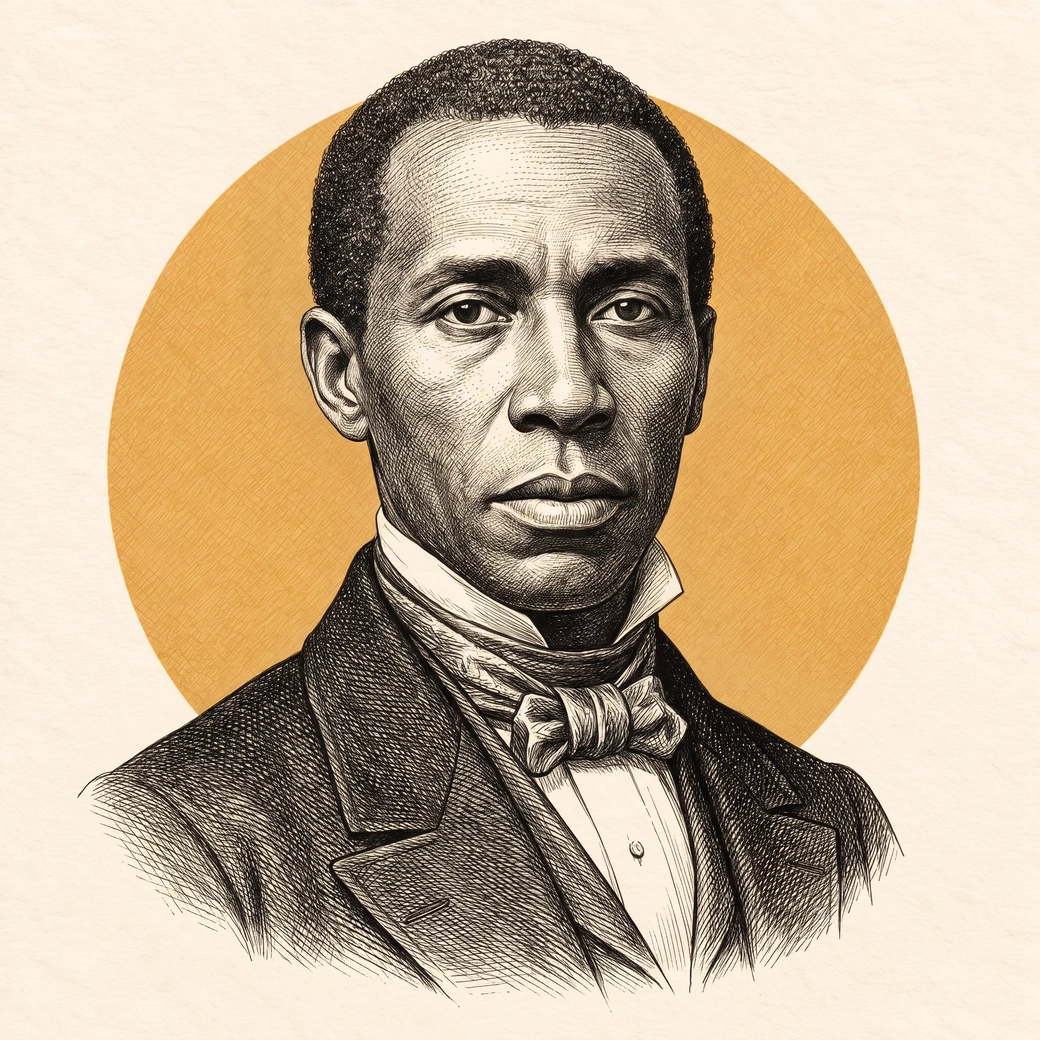
Thomas Jennings was a Black American tailor, inventor and businessman in New York City who lived from 1791 to 1859. His work began with a practical problem: conventional cleaning methods could damage clothing. He experimented with alternatives and developed a process he called dry scouring.
Jennings applied for a patent in 1820 and received it the following year, becoming the first Black American to be granted a U.S. patent. Under the Patent Act of 1793, an applicant had to sign an oath declaring himself a citizen of the United States. Jennings, a freeman, was a citizen, and the patent was awarded. His dry scouring process was a predecessor to today's dry cleaning.
Business success helped Jennings support abolition and civil rights. He was a founder and trustee of the Abyssinian Baptist Church and served as assistant secretary for the First Annual Convention of the People of Color in Philadelphia in 1831. In 1855, he helped organize the Legal Rights Association, which raised challenges to discrimination and funded and organized legal defenses in court cases. His career linked skilled trade and invention with organized efforts to expand opportunity.
When Jennings died, Frederick Douglass wrote about his death. He noted the importance of the patent Jennings received and that the patent recognized him as a "citizen of the United States," a designation that, at the time, shocked many. Jennings was inducted into the National Inventors Hall of Fame in 2015.
A patent was more than commercial property for a free Black citizen in the early republic. It was government recognition of the holder as an inventor and, under the oath the law required, a citizen. Jennings' patent set that precedent for the Black inventors who followed him, and the business it supported paid for organizing work that attacked discrimination itself. New York's Black community in those decades built the institutions Jennings joined: churches, newspapers and mutual-aid societies that gave an excluded population a civic structure of its own.
The patent also protected his business: it stopped competitors from copying his process, and the income from his tailor shop and cleaning work funded decades of organizing.