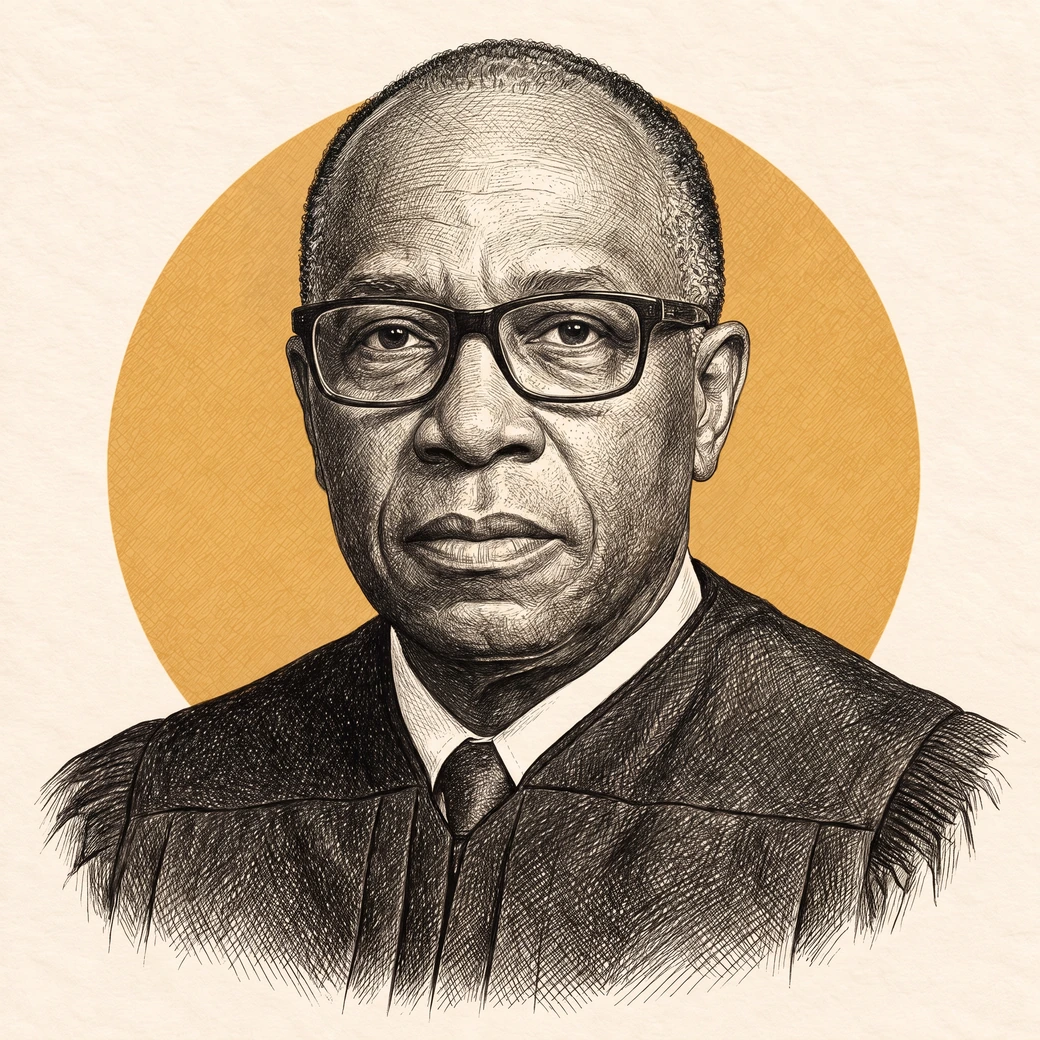
U. W. Clemon became Alabama's first Black federal judge in 1980. Before his appointment, he had represented civil-rights plaintiffs and served in the state Senate. He spent nearly three decades on the U.S. District Court for the Northern District of Alabama, including seven years as chief judge. One of the trials he presided over was Lilly Ledbetter's pay-discrimination case against Goodyear, which later reached the Supreme Court and prompted congressional action.
Born in Fairfield, Alabama, in 1943, Clemon graduated from Miles College in 1965 and Columbia Law School in 1968. As a Miles student, he took part in Birmingham's civil-rights movement, including a campaign against segregated downtown businesses. Alabama paid for his law studies outside the state under a system used to maintain segregated graduate schools at home. At Columbia, he began working with the NAACP Legal Defense and Educational Fund on school-desegregation litigation.
The Federal Judicial Center records Clemon's Birmingham private practice from 1969 to 1980. He won election to the Alabama Senate in 1974, one of two Black candidates elected to that chamber for the first time since Reconstruction. His legislative service ran from 1975 to 1980. He pushed Governor George Wallace to appoint Black Alabamians to state boards and agencies. Clemon's firm biography also records his chairmanship of the Senate's Rules and Judiciary committees during his legislative career.
President Jimmy Carter nominated Clemon to the federal bench on January 10, 1980. The Senate confirmed him on June 26, and his commission followed on June 30. He served as chief judge from 1999 to 2006 and retired on January 31, 2009. In the Ledbetter litigation, a jury returned a verdict for the plaintiff in his court. The Eleventh Circuit reversed, and the Supreme Court affirmed that appellate ruling in 2007. Congress subsequently changed the law through the Lilly Ledbetter Fair Pay Act of 2009.
Clemon returned to legal practice after retirement and joined Mehri & Skalet as of counsel in 2017. His work included representing Black plaintiffs opposing Gardendale's effort to separate its schools from the Jefferson County system. The firm records his argument on appeal and a reversal in February 2018. In a 2022 Columbia interview, he also described continuing work on Stout v. Jefferson County Board of Education, a school-desegregation case he first worked on as a law student in 1965. More than half a century later, he was again representing its plaintiffs.