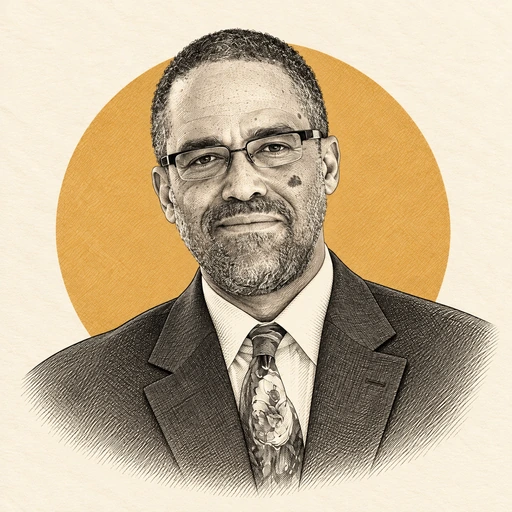
Wayne Joseph Riley, MD, MPH, MBA, is a general internist and president of SUNY Downstate Health Sciences University in Brooklyn. SUNY's trustees appointed him in January 2017, and he began the job on April 3. The appointment also included tenured professorships in internal medicine and in health policy and management.
A New Orleans native, Riley worked in the city's mayoral office before entering medicine, eventually becoming executive assistant for intergovernmental relations. He earned a bachelor's degree in anthropology, concentrating in medical anthropology, at Yale University. His further education included a medical degree from Morehouse School of Medicine, a master of public health in health systems management from Tulane University and an MBA from Rice University. He completed his internal medicine residency at Baylor College of Medicine in Houston.
At Baylor, Riley combined clinical teaching with administrative work. He served as assistant chief of medicine at Ben Taub General Hospital and later became Baylor's vice president and vice dean for health affairs and governmental relations. From 2007 to 2013, he was president and chief executive officer of Meharry Medical College in Nashville. During his tenure, the college obtained its first accreditation for its public health master's program and received Robert Wood Johnson Foundation support to establish a center for health policy.
Riley's professional leadership also includes a presidency of the American College of Physicians. In 2020, he was elected chair of the New York Academy of Medicine's board of trustees and began a three-year term on the Medicare Payment Advisory Commission, which advises Congress on Medicare payment policy.
His Downstate presidency has included serious hospital financial and infrastructure pressures. In June 2025, Governor Kathy Hochul reported that the hospital had faced a roughly $100 million annual deficit the previous year. The state announced more than $1 billion in planned capital investment alongside a community advisory board proposal to retain inpatient and outpatient services, renovate patient rooms and the emergency department, and add a hospital annex. Riley welcomed the plan and credited government, university, labor and community participants.