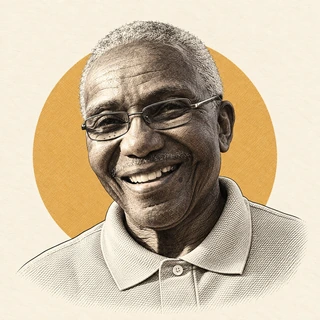
At Xerox's Palo Alto Research Center in the late 1970s, a team led by Clarence A. "Skip" Ellis developed Officetalk, an office system that let people work together through networked computers. The University of Illinois' Siebel School records it as the first office system to use icons, the clickable pictures that later became standard on personal computers. Most office computing at the time meant one person working alone at one terminal, so the idea of software built around shared work was ahead of the equipment most offices owned.
Ellis had already made history before that project. In 1969, he became the first African American to earn a doctorate in computer science, receiving his degree from the University of Illinois. He had studied mathematics and physics at Beloit College, where he helped establish a computer laboratory, at a time when even many large universities lacked one.
His later research developed the mathematics and software techniques behind collaboration. He worked on operational transformation, an approach that lets several people edit the same document at the same time while keeping every copy consistent, and helped define computer-supported cooperative work, the field that studies software for shared work. Tools of this kind now support everything from shared documents to large-scale collaborative editing.
Ellis joined the University of Colorado Boulder in 1992 and retired in 2010. Alongside advanced courses, he taught introductory computer science and encouraged students from different backgrounds to consider the field. He also maintained educational ties with Ashesi University in Ghana. Born in 1943, Ellis died in 2014.
He spent his career in the places where the field was being invented, from Xerox's research center to university classrooms where he taught the field's basics to newcomers.
Officetalk's descendants are visible in any modern shared document: the icons, the multi-user editing, the assumption that software should expect more than one person to be working. Ellis' group built those assumptions when computing hardware could barely support them, which is part of why the work took sustained research rather than a single product release.