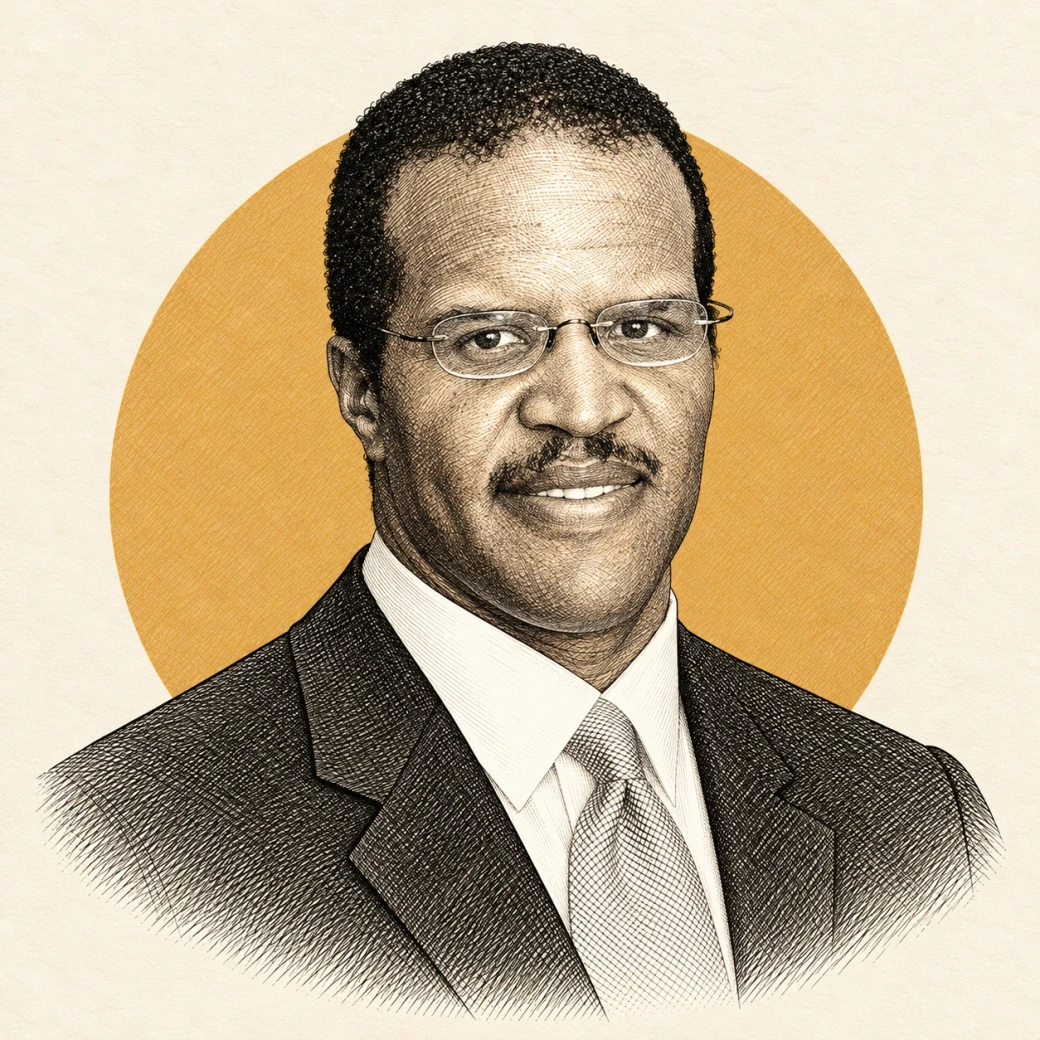
Before Eddie C. Brown founded an investment firm, he worked on computer circuits. A Howard University graduate, he served as an Army Signal Corps officer and then joined IBM. He earned a master's degree in electrical engineering from New York University and an MBA from Indiana University in 1970. He spent his early career on that technical work before finance drew him in.
Brown came from Apopka, Florida. A biographical account from the John Land Apopka Community Trust traces his path from Apopka to a long career in Baltimore.
His early investment experience included Irwin Management Company. In 1973, he joined T. Rowe Price, where he spent a decade as a vice president and portfolio manager. In 1983, he established Brown Capital Management in Baltimore. The firm describes itself as one of the premier and oldest African-American-founded asset managers, and it remains wholly owned by its employees. It manages growth-company strategies across separately managed accounts and mutual funds for institutional clients, financial advisors and individual investors. Bowie State University's account also records his appearances as a panelist on *Wall Street Week*, the long-running public television program about markets, which brought discussions of finance before a national audience alongside the responsibilities of running his own firm.
Brown's civic work has been shared with his wife, C. Sylvia Brown. The Baltimore Community Foundation records the establishment of their family foundation in 1994, a joint philanthropy administered through the community foundation. Its grant program focuses on health, the arts and K-12 education in the Baltimore area, with attention to the African American community.
The published guidelines make the work concrete. Educational priorities include mentoring, after-school activities and access to technology, and arts programs can introduce young people to creative experiences. The guidelines favor sustained engagement with a group of children and ask organizations to demonstrate a record of work and clear outcomes.