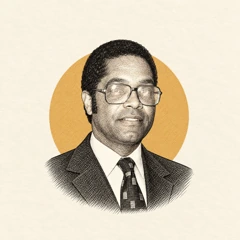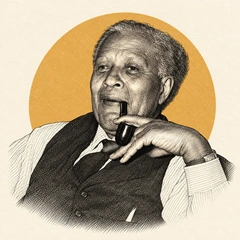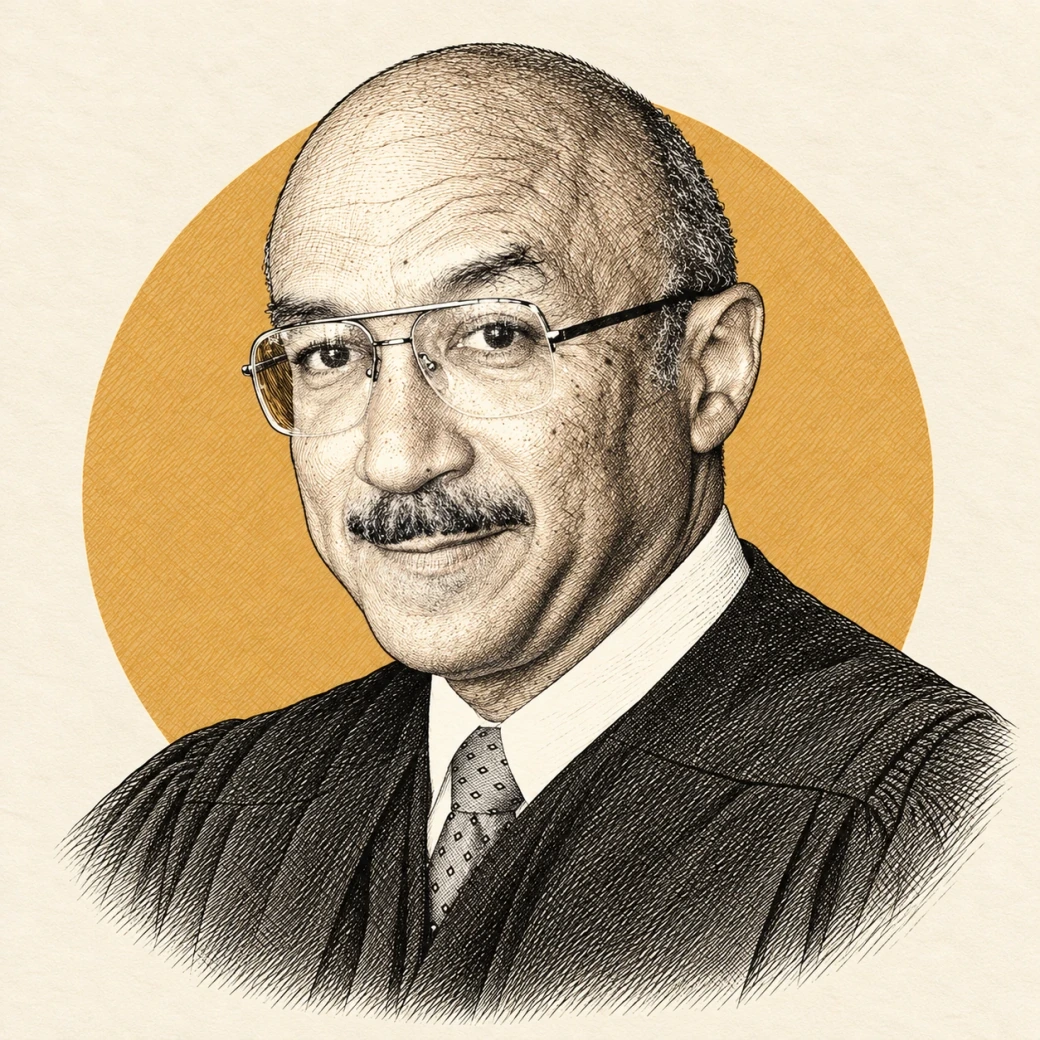
In 2014, Harry T. Edwards addressed the first public meeting of the National Commission on Forensic Science with a warning about the limits of courts. Judges could not repair unreliable forensic methods by themselves. Scientific research, stronger standards and honest accounts of uncertainty had to come from the people doing the science.
Edwards spoke as a federal appeals judge and a former co-chair of the National Academy of Sciences committee that examined the forensic-science community. Its 2009 report had identified gaps in research, oversight and laboratory standards. He pressed the new commission to follow that diagnosis with changes in practice. The issue reached beyond how confidently an expert spoke in court to whether the underlying method had been tested.
Long before that work, Edwards trained as a lawyer. Born in New York City in 1940, he earned a bachelor's degree at Cornell in 1962 and a law degree at the University of Michigan in 1965. Five years of practice in Chicago preceded his move into teaching. He joined Michigan's law faculty in 1970, taught at Harvard from 1975 to 1977, then returned to Michigan until 1980. He also worked as a labor arbitrator and chaired Amtrak's board.
President Jimmy Carter nominated Edwards to the U.S. Court of Appeals for the D.C. Circuit in December 1979. He joined the court in 1980 and served as chief judge from 1994 to 2001. Teaching continued after his appointment, including at NYU School of Law, where he has taught since 1990. His writing has addressed how judges work together, legal ethics and the relationship between professional training and practice.
That relationship was the subject of his 1992 article, The Growing Disjunction Between Legal Education and the Legal Profession. Edwards had worked in law firms and universities before becoming a judge; his criticism of the distance between legal education and legal work came from experience in each setting. He also co-authored Federal Standards of Review with Linda Elliott, a practical guide to the standards appellate courts use when reviewing trial-court decisions and agency actions.
Edwards took senior status in November 2005. In his 2014 remarks, he argued that repeated acceptance of a technique in court could not substitute for testing its reliability.