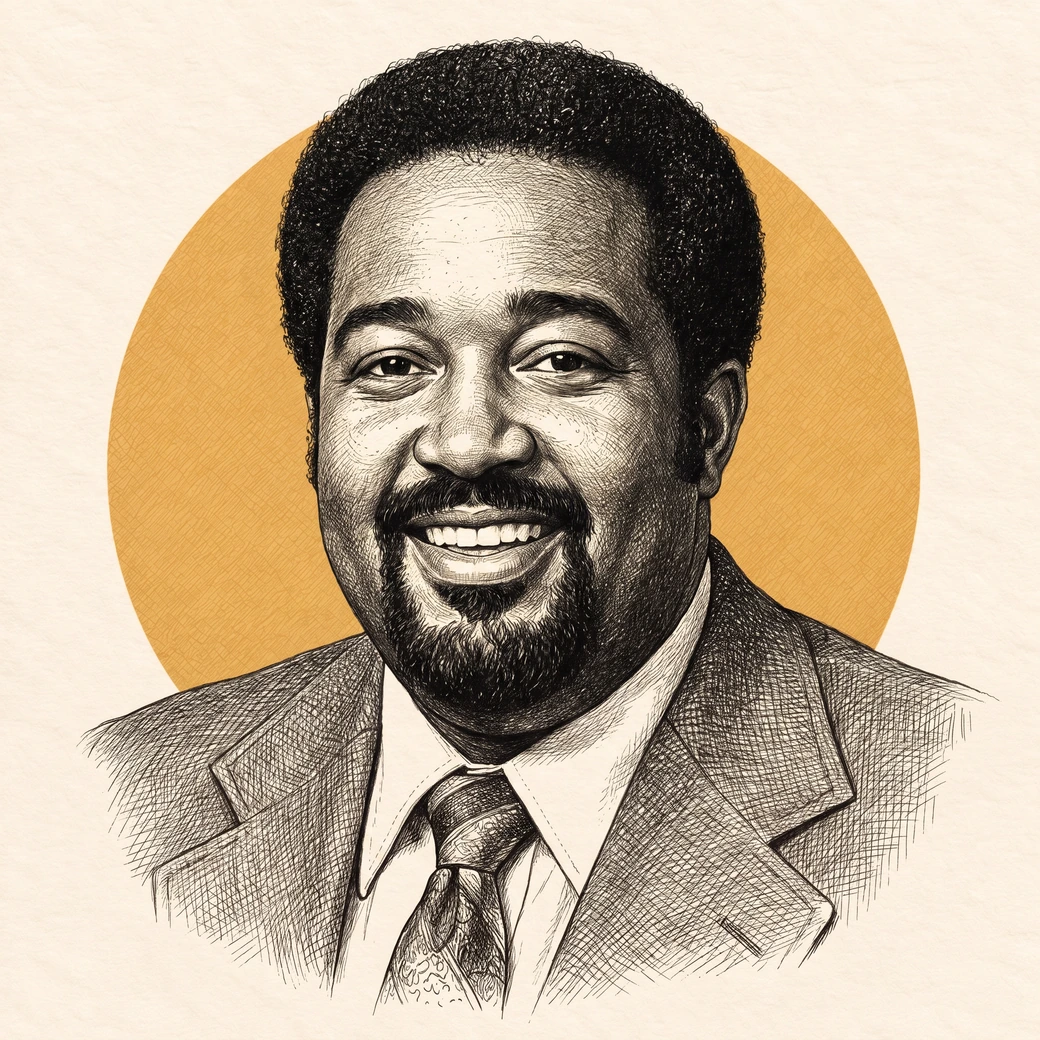
On July 21, 1969, the day after Neil Armstrong and Buzz Aldrin walked on the Moon, teams on Earth began aiming lasers at a reflector the astronauts had left on the lunar surface. The returning light confirmed the reflector worked and allowed scientists to measure the distance between Earth and the Moon with new precision. Hildreth "Hal" Walker Jr., an African American electronics and laser specialist, led a Union Carbide team that adapted a ruby laser for that Apollo 11 lunar-ranging experiment, firing from California's Lick Observatory. His contribution was part of a collaborative effort involving engineers, astronomers and astronauts.
Walker was born in 1933, and his career grew from practical experience with mechanics, radar and communications systems. He worked on early-warning technology before taking on the precise demands of laser engineering, a field in which a beam must be aimed, timed and measured with extraordinary care.
A laser ranging a quarter-million miles to the Moon and back requires stability at both ends. The experiment measured the Earth-Moon distance and continued to support lunar science for decades, one of the Apollo program's longer-lasting scientific legacies. Walker's team work placed him inside that record.
With his wife, Bettye Walker, he co-founded A-MAN, an organization that used hands-on demonstrations and projects to encourage young people's interest in mathematics, science and technology. The work extended his technical experience into education, connecting students with the kind of engineering he had spent a career doing. He died in 2024.
Laser ranging with the Apollo reflectors went on to refine measurements of the Earth-Moon distance in the years that followed. Walker's 1969 assignment sat at the front end of that record, adapting a laser system so that a pulse sent from California could find a reflector a quarter-million miles away and return strongly enough to be counted.
Walker's later career included university teaching, and the A-MAN program he and his wife founded grew from their conviction that hands-on work draws students into science earlier than lectures do. The organization connected classrooms with working engineers, extending the same collaborative habits that had carried his laser work into education.