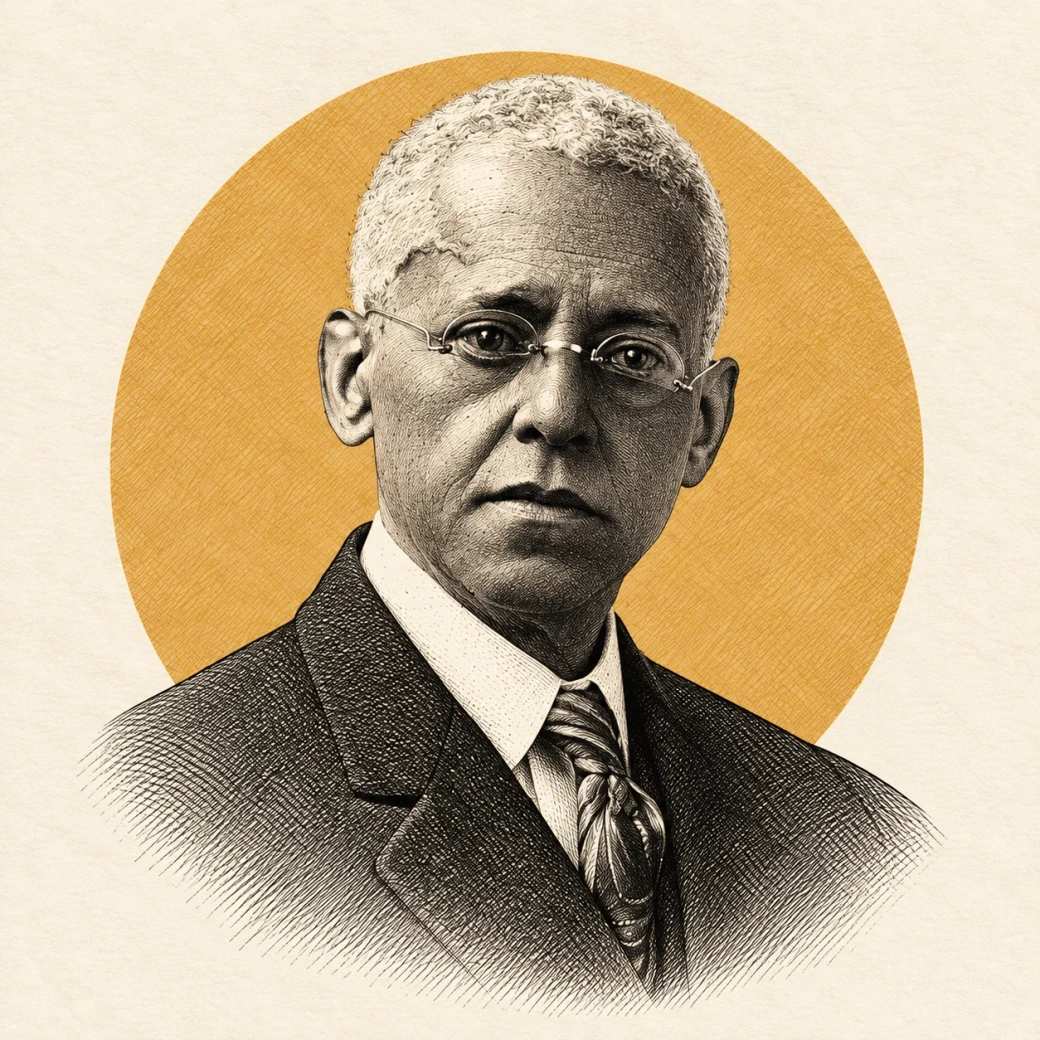
Lewis Howard Latimer was born in Chelsea, Massachusetts, in 1848 to parents who had been enslaved. He served in the Union Navy during the Civil War and later learned technical drafting. The National Inventors Hall of Fame describes a self-taught draftsman whose work included drawings for Alexander Graham Bell's first telephone patent application. Turning an inventor's idea into the precise drawings a patent requires was skilled technical work, and Latimer made a career of it.
Latimer's best-known contribution concerned the manufacture of carbon filaments for incandescent lamps. He worked for the United States Electric Lighting Company, led by Hiram Maxim. Existing electric lamps needed components that could be made reliably, and Latimer's work addressed a specific manufacturing difficulty, helping make an existing technology more practical.
His patent for a process of manufacturing carbons was issued on January 17, 1882, following an application filed in February 1881. The specification explains how delicate material could break or distort during heating. Latimer proposed protecting it in enclosing sheets while it was carbonized.
In 1884, Latimer began working for the Edison Electric Light Company in New York City. The National Park Service records service there through 1896 as an engineer, draftsman and legal expert. It also records that he did not work directly with Edison at the Menlo Park or West Orange laboratories; his company role and his later membership in the Edison Pioneers grew from his work in the company's operations.
His career included helping install electric-lighting systems in the United States, Canada and England. Such work required bringing technical ideas into operating settings. It complemented his patent-related responsibilities, which included investigating competing claims and serving as an expert witness.
Latimer also wrote about the technology. In 1890, he published Incandescent Electric Lighting: A Practical Description of the Edison System. MIT's Lemelson educational account identifies the book alongside his engineering work. He died in 1928 and was inducted into the National Inventors Hall of Fame in 2006.
Latimer also handled the practical side of lighting: systems he helped install required wiring, generators and customer buildings to work together, and problems had to be diagnosed on site.