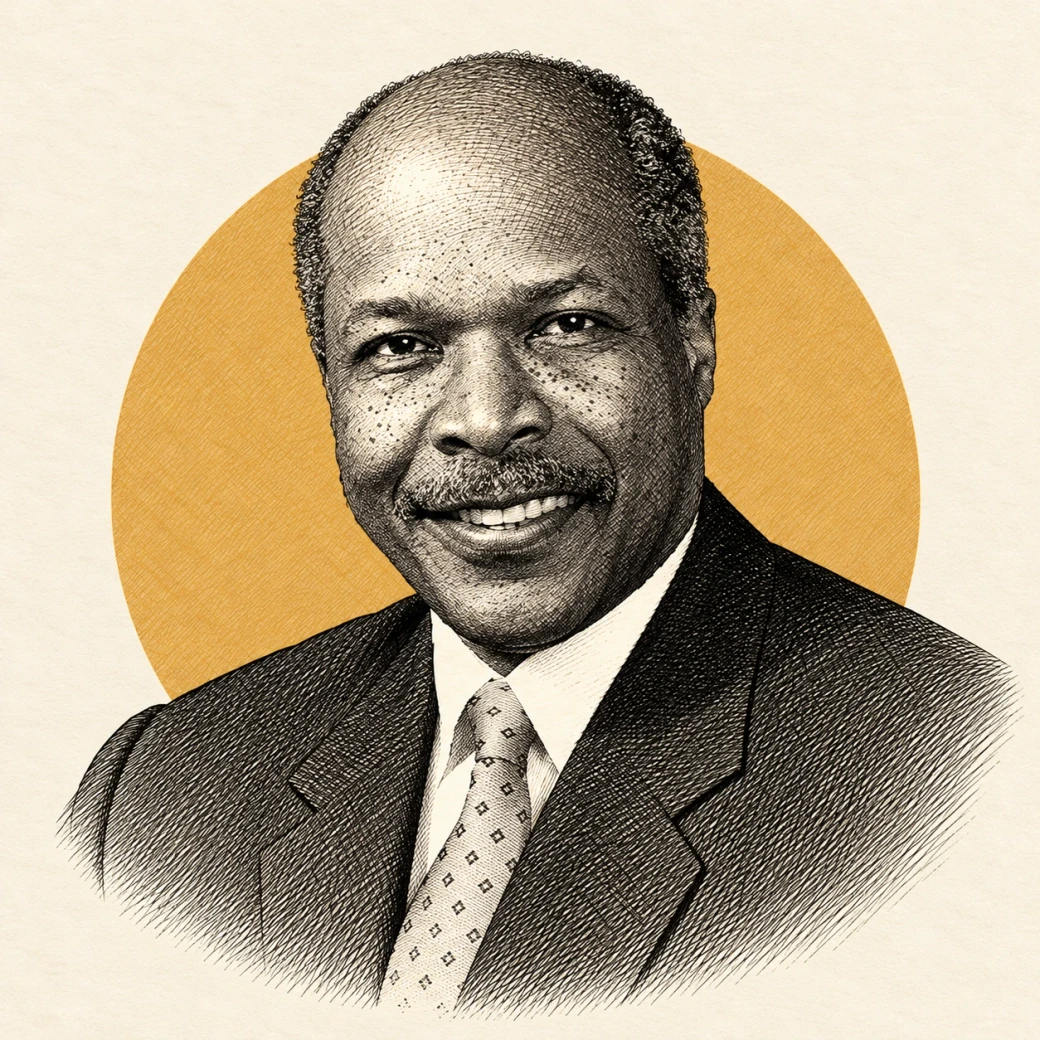
Louis Wade Sullivan was born in Atlanta in 1933 and spent much of his childhood in Blakely, Georgia. His mother was a teacher; his father operated a funeral home and ambulance service. Sullivan later recalled traveling with his father to visit Joseph Griffin, a Black physician in Bainbridge, and noticing the respect with which Griffin treated his patients.
He also described his parents sending him and his brother to school in Atlanta, where he encountered Black doctors, business owners and other professionals. At Morehouse College, he remembered president Benjamin Mays challenging students to prepare carefully for their chosen work.
He graduated from Morehouse in 1954 and earned his medical degree at Boston University in 1958. After further training, he built a career in hematology, research and teaching. His positions included work at Harvard, Boston University and Boston City Hospital, where he founded the Boston University Hematology Service. Medical research preceded the administrative responsibilities that later made him nationally known.
In 1975, he became founding dean and director of Morehouse College's medical education program. The school became independent from the college in 1981, with Sullivan as its dean and first president. Its development involved building an institution capable of educating future physicians, alongside the work of its faculty, trustees and students.
He also co-founded the Association of Minority Health Professions Schools in 1977. The National Library of Medicine describes its advocacy for training, career counseling and scholarships. In 1989, Sullivan left Morehouse to serve as secretary of health and human services under President George H. W. Bush, holding the cabinet position until 1993. During that period, the department advanced initiatives including *Healthy People 2000* and new nutrition-labeling requirements.
His federal service involved compromise as well as advocacy. In a 2003 oral-history interview, Sullivan acknowledged changing his position on needle-exchange policy. He described the decision as a political compromise that continued to trouble him.
Sullivan returned to Morehouse School of Medicine in 1993 and served as president until retiring in 2002. He subsequently chaired a national commission examining diversity in the health-care workforce.