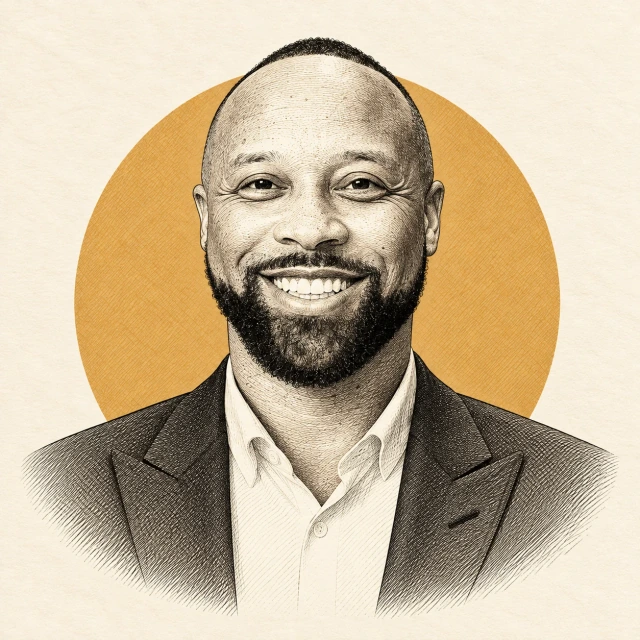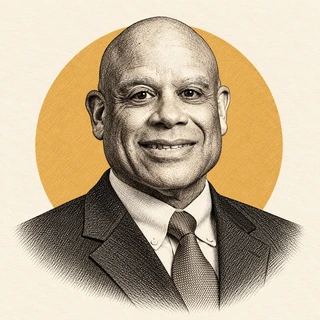
Mark Edward Dean was born in Jefferson City, Tennessee, in 1957. He studied electrical engineering at the University of Tennessee, earned a master's degree at Florida Atlantic University and completed a doctorate at Stanford. His career would combine hands-on computer design, leadership of research teams and teaching. The National Inventors Hall of Fame records these stages as part of his work on systems that made personal computers more useful.
At IBM, Dean contributed to the development of the personal computer and held three of its nine original patents. One particularly important contribution concerned how a computer communicated with attached devices. Working with Dennis Moeller, he helped create the expansion-bus architecture associated with the IBM PC, the shared pathway that lets the computer's processor talk to printers, modems, extra memory and other equipment plugged into it.
A computer depends on processors, memory, software, connectors and many other components working together. Dean and Moeller's work addressed the way parts of that system could communicate, and the National Inventors Hall of Fame inducted both men in 1997, preserving their joint credit for the architecture.
Dean also became a leader within IBM research. The company named him an IBM Fellow in 1995, its highest technical honor, identifying him as the first Black American to receive the distinction. Its history describes his leadership of an Austin research team that developed an experimental gigahertz processor. He later contributed to the Blue Gene supercomputing effort, another project involving researchers across institutions.
In 2013, Dean joined the University of Tennessee faculty. His work there included computer architecture and approaches that organize computation around data. He also served as interim dean of the engineering college. He retired from his active faculty position in 2019 and remains associated with the university as an emeritus professor.
The university honored Dean again in 2026, naming him and fellow alumnus Min Kao the first electrical engineering and computer science Alumni Hall of Fame inductees. The recognition connected his professional record with the department where his undergraduate training began.
The IBM Fellow appointment carries freedom to choose research directions, and Dean used his to push the speed of processors and the reliability of large systems.