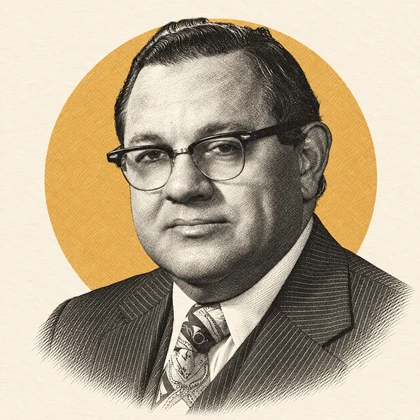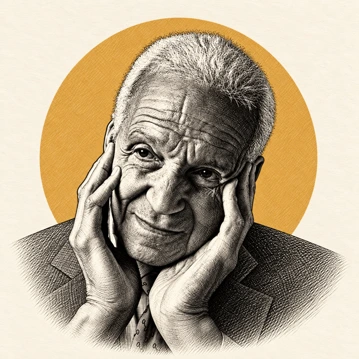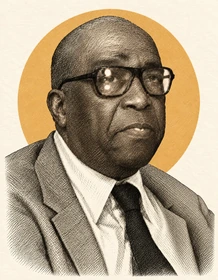
Samuel W. Tucker organized a challenge to Alexandria's segregated public library in 1939. On August 21, five young Black men entered the library, requested cards and, after being refused, sat down to read. Tucker had prepared them for the protest and represented them after their arrests. The city responded by opening a separate library for Black residents the following year. Tucker refused a card to that branch and continued to seek access to the existing library.
Born in Alexandria on June 18, 1913, Tucker graduated from Howard University in 1933. He studied law with a local attorney and entered the Virginia bar in 1934. His library protest came early in a legal career that would include military service and decades of civil-rights litigation. During World War II he served in the Army, reaching the rank of major. After the war, he practiced law in Emporia, Virginia.
Tucker represented clients in disputes over school segregation, unequal teacher pay and exclusion from juries. He also faced an unsuccessful effort to have him disbarred. In the 1960s, he joined the Richmond civil-rights firm associated with Oliver Hill and Henry Marsh. His school cases included work concerning Prince Edward County, where officials had closed public schools rather than integrate them.
In Green v. County School Board of New Kent County, Tucker and Jack Greenberg argued for Black students before the Supreme Court in 1968. New Kent's school board had adopted a plan allowing families to choose between its two schools. After three years, no white student had chosen the previously all-Black school, and most Black students still attended it. The question was whether that plan satisfied the board's obligation to dismantle a school system organized by race.
The Court held that New Kent's plan had failed. Its May 27, 1968, decision placed responsibility on the school board to produce an effective remedy and required the lower court to evaluate how the plan worked in practice. The ruling did not prohibit every possible choice plan; it rejected reliance on one that left the dual system in place when more effective alternatives were available. Tucker continued his civil-rights practice and died in 1990.